

Quantum Biology: Expanding the Life Science Paradigm
Steen Hvass Ingwersen1 & Peter Alsted Pedersen2
Institute for Frontier Science, 6114 LaSalle Ave PMB 605, Oakland, CA 94611 USA
1Corresponding author: Steen H. Ingwersen, MSci, Quantum Healing Center, Ryesgade 27, 1. DK-2200 Copenhagen N, Denmark. steen.ingwersen@live.dk
2Retired: Peter Alsted Pedersen, PhD, Bagsværdvej 248, Blok 2, Lejl. 214, DK-2880 Bagsværd, Denmark. peteralsted.pedersen@gmail.com
Keywords: wireless; Wi-FiTM; radiofrequency; microwave; seed; sprout; pea; red clover; water structurizer; structured water
Submitted: July 11, 2025
Revised:November 21, 2025
Accepted: December 5, 2025
Published: April 24, 2026
Abstract
For many years, the life sciences remained unaffected by the quantum mechanical revolution of physics, partly due to the assumption that quantum effects cancel out in the environment within living cells. However, it has become clear that quantum phenomena are at play in biological processes such as photosynthesis and enzymatic catalysis, and quantum biology is now a well-established scientific discipline.
Here, we review selected experimental findings to suggest a broader scope for quantum biology than currently believed. This includes repeated demonstrations of biological effects of highly diluted substances as well as of electro-activation, a more recent method for the transfer of biological effects from a substance to a carrier. A separate discipline, biological transmutation, has demonstrated conversion of stable elements using highly selective analytical techniques. These findings further increase the necessity for abandoning the classical model of atoms and molecules as stable and solid entities, a model still used in chemistry and biology.
The accumulation of such phenomena poses a challenge to the current paradigm in life-science. This calls for adopting the quantum mechanical concepts on a broader scale in biology than done so far. Here, we propose key features of such a revised paradigm. We envisage that this will pave the way for the life sciences to break through some of their current conceptual barriers and to study unexpected phenomena such as those mentioned above. Moreover, new possibilities for prevention and treatment of disease are likely to emerge in the wake of such a paradigm change.
Introduction
The life sciences have seen tremendous progress over the past several decades. Detailed observations of biological phenomena from disciplines including molecular biology, genetics, immunology, and pharmacology have clarified many chemical aspects of biology and resulted in a wealth of improved treatment options for many diseases. However, serious limitations persist with regard to causative treatment of chronic diseases such as cardiovascular disease and cancer, despite the allocation of vast amounts of resources. This raises the question: are there innovation barriers within the current life science paradigm that impede the development of novel approaches for treating disease beyond the mere symptomatic treatments?
Modern life science may be characterized by two major traits to evaluate the existence of such barriers. Firstly, many years of scientific progress have provided insights into a wealth of molecular mechanisms in biology and medicine. This includes understanding of the mechanisms of action — both qualitatively and on a quantitative scale — of essentially all newly approved pharmaceuticals. Without a demonstration of the mechanism of action, regulatory approval of new pharmaceuticals is hardly possible any more. Secondly, contrary to the growing insight into molecular interactions, life sciences appear to have disregarded the progress in physics over the last century, in particular regarding the strange behavior of the atomic and subatomic world. Hence, the revolution of quantum mechanics has passed almost unnoticed by biology. This disregard is striking, as quantum mechanics makes up a crucial foundation of physics and chemistry and therefore, of life science.
Quantum mechanics emerged as a new scientific discipline 100 years ago prompted by observations of a range of strange behaviors in the world of atomic and subatomic particles. These particles appeared to disobey the laws of classical physics, but rather to be subject to phenomena like coherence, entanglement, and tunnelling. Strikingly, the idea of a particle as a unique entity with a specific location in space had to be abandoned and replaced by the concept of particle-wave duality: such entities behave as particles in some experiments and as waves in others, thus giving rise to the phenomenon of coherence in a similar manner to macroscopic waves. Entanglement denotes the situation where two particles are coupled in a way which enables them to interact instantaneously over huge distances, a true situation of non-locality apparently defying any limitation of distance in space. Finally, quantum tunnelling is the process whereby particles appear to be able to “tunnel” through an energy barrier which could otherwise not be surmounted due to the lack of sufficient energy.
For many years, life science researchers disregarded quantum mechanics, believing quantum mechanical phenomena were irrelevant to biological processes. It was assumed that quantum mechanical phenomena, such as wave-like properties, were restricted to the nanoworld of atoms and subatomic particles, and would therefore not apply to macromolecules like enzymes and DNA. Moreover, it was known from the behavior of subatomic entities that quantum phenomena such as coherence could vanish as a result of an interaction of the particles with the surroundings, e.g. simply as the result of a measurement, the so-called de-coherence. To many researchers, this made it unlikely for quantum phenomena to play a role in life processes with their wet, warm, and reactive environments offering huge possibilities of interactions with nearby chemical entities.
The assumption that quantum phenomena are irrelevant in biology has been proven wrong by a considerable amount of empirical evidence, and quantum biology is now a well-established scientific discipline defined as “the application of quantum theory to aspects of biology for which classical physics fails to give an accurate description” (Marais et al., 2018). Scientists in this field use quantum mechanical concepts to study molecular and subatomic aspects of specific phenomena, such as photosynthesis, enzymatic catalysis, olfaction, migration of birds, and neurotransmission (Arndt et al., 2009; Ball, 2011; Lambert et al., 2013; Vattay et al., 2014; Brookes, 2017; Marais et al., 2018; Cao et al., 2020).
Here, we review some areas from quantum biology and argue for a broader definition of quantum biology than the one cited above. To substantiate this, we review some unexpected empirical findings which seriously challenge the current paradigm and call for a revised paradigm. We propose that specific quantum mechanical concepts be adopted to facilitate such a revision. This will likely facilitate the development of innovative treatments for disease that may seem highly unrealistic under the current paradigm.
Features of the Current Paradigm in the Life Sciences
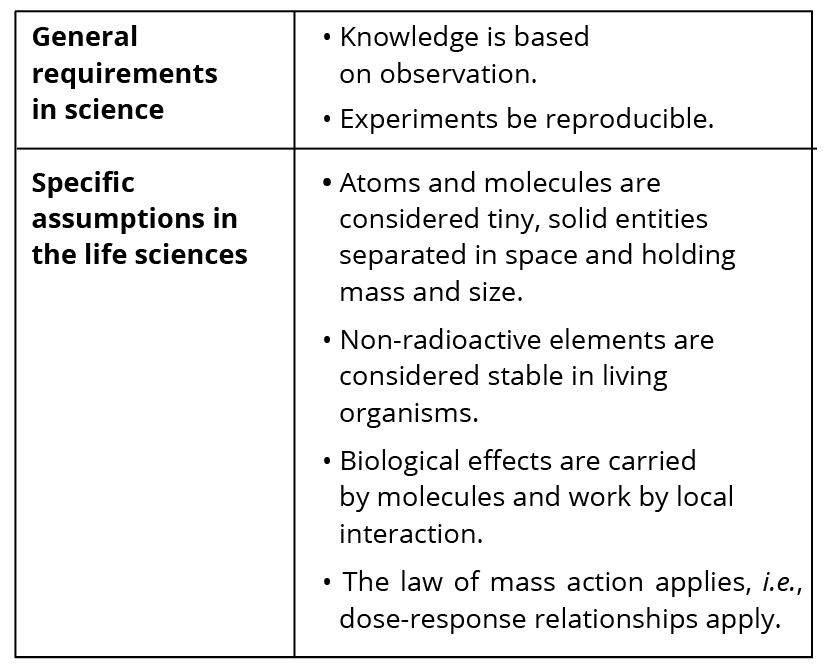
Scientific paradigms are rarely formally defined, but some general principles and assumptions are broadly adopted at a given point in history. Table 1 summarizes key features of the current paradigm in the life sciences.
The requirement that scientific results be based on observation rather than on pure belief was a cornerstone in the historical development of science and is shared among all the natural sciences. This is a principle which needs not be challenged, but rather be reinforced. Although it is understood that the acceptance of a fundamentally new phenomenon imposes high demands on the quality of the evidence, experimental results are occasionally contradicted in the scientific literature with sole reference to current theory. Such behavior is approaching belief and should not be accepted in scientific discussions, as it represents a serious barrier towards innovation. Historically, most important discoveries and innovations were made only after the rejection of prior paradigms or theories.
The second requirement mentioned in Table 1 — that results should be reproducible — does not imply that unique incidents never occur in nature, but it is merely a requirement for drawing general conclusions from empirical results. However, it is important to acknowledge that when experimenting within a fundamentally new field of phenomena, it may not be possible to control for all influencing factors during the initial experimental phase, hence problems with reproducibility may occasionally occur. Therefore, rather than completely rejecting results during a period with impaired reproducibility, a true scientific approach would be to await further developments before jumping to final conclusions. Ultimately, science is not about accepting or rejecting a specific scientific paper, but rather about approaching a deeper understanding of nature.
Next, some specific assumptions have established themselves in the life sciences as well as in most areas of chemistry, as indicated in Table 1. First, atoms and molecules are considered to be solid spheres that are separated in space and hold mass and size in analogy with our everyday surroundings in the macroscopic world. Importantly, atomic nuclei are considered stable over time (disregarding radioactive isotopes, which decay and transform to different isotopes by a characteristic half-life). The physical explanation is that large energy barriers need to be overcome for nuclear reactions to take place under normal circumstances, and similar barriers are believed to exist in living organisms. Finally, in the field of pharmacology, drugs are considered to act exclusively via local interactions with soluble or membrane-bound targets such as enzymes and receptors. Consequently, the law of mass action is taken to apply to drug action, implying that drug effects are concentration-related and therefore subject to dose-response relationships. If dose-response cannot be established, proposed drug effects are normally considered questionable.
The ball-like models of atomic structures with their assumptions have proven their value for many purposes. However, as will be shown below, they merely reflect a 19th century understanding of matter and do not take the 20th century’s evolution of quantum mechanics into consideration. First, let us take a closer view at some features of quantum mechanics.
The Revolution of Quantum Mechanics
According to Thomas Kuhn (1970), science does not develop in a gradual fashion but rather through “scientific revolutions.” One such revolution, that of quantum mechanics, occurred about 100 years ago. Quantum mechanics was essentially a farewell to the 19th century’s concept of atoms and molecules and the adoption of more complicated and probabilistic models of the structure of matter.
According to one of the pioneers, Nobel laureate Niels Bohr, quantum mechanics altered scientific thinking to the degree that “Those who are not shocked when they first come across quantum theory cannot possibly have understood it” (Bohr, 1971).
One important concept of quantum mechanics is that of superposition, or coherence of atoms and molecules. This concept was previously used to describe the mechanism by which waves interact, e.g. by diffraction of light through a grating. Following the surprising discovery that atomic entities are also able to superpose with themselves, a theory of particle-wave duality was developed: subatomic items such as electrons, neutrons, and protons behave as particles in some experiments and as waves in others. Thus, it was demonstrated that a single electron can superpose with itself when passing through two adjacent slits (the so-called double-slit experiments). The electron, therefore, can be regarded as delocalized in space in such experiments. In other words, the electron may be at several locations in space at the same time. It was once thought that coherences are confined to the subatomic world, but quantum behavior has since been observed in larger molecules, such as C60 as well (Arndt et al., 1999). Consequently, quantum mechanical behavior may also apply to the scale normally encountered in chemistry and biochemistry.
Another revolutionary concept in quantum mechanics is that of entanglement, which denotes the situation where particles originating from a single atomic event are coupled in such a way that the characteristics of one particle (e.g. its spin) cannot be described independently from that of the other. If, for instance, two entangled electrons emanate from the same event, they must have opposite spins to obey the laws of physics. However, according to quantum mechanics, no spin value can be allocated to the particles until it is measured, and when the spin of one electron has been established, the spin of the other instantaneously assumes the opposite value. This has been shown to be true experimentally, even with entangled particles separated by such large distance that no communication could have occurred between them (Matson, 2012). Hence, such systems of two particles may be regarded as entirely delocalized in space.
On some occasions, atomic or subatomic entities can pass an energy barrier even if they lack the necessary kinetic energy to do so. This phenomenon — denoted quantum tunnelling — is well established in physics and, as we shall see, appears to be at play in biology as well. The probability of tunnelling is strongly dependent on size, with probability decreasing as mass increases (Arndt et al., 2009).
Taken together, the quantum mechanical discoveries led physicists to recognize a universe of strange phenomena in which the laws of the macroscopic physical world are not valid. Instead, quantum mechanics describes the state of a physical system by means of mathematical wave functions (e.g. Schrödinger equations) which may be used to derive probabilities of measurements made on the system.
The physicist Nobel laureate Max Planck, a pioneer of quantum mechanics, expressed his view of the atom in a radical way: “… my research has shown me that there is no matter as such! All matter originates and exists only by virtue of a force which brings the particles of an atom to vibration and holds this most minute solar system of the atom together” (Planck, 1944).
Literature Review
Quantum Biology — A Well-Established Discipline
While it is difficult to understand quantum mechanics using concepts from the macroscopic world, quantum mechanical concepts have been accepted because of their ability to explain phenomena in the nanoworld of atoms and subatomic particles, which cannot be explained by classical physics. The basic findings of quantum mechanics were done with subatomic particles like electrons, neutrons, and protons at dry, almost completely isolated conditions and at low temperatures. These precautions were taken in order to reduce the possibility of coherent particles (or rather waves) interfering with the environment and thereby losing their coherence, a process known as decoherence. Therefore, phenomena like quantum coherence were thought not to occur with macromolecules in the wet, hot, and crowded conditions within a living cell.
However, over the course of the last 2–3 decades, a small but growing community of scientists has explored whether quantum phenomena could play a role in biological processes. Phenomena like quantum coherence and tunnelling have now been investigated in several biological processes, including photosynthesis and enzyme catalysis, as shown below. The question of how decoherence is avoided in macromolecules, especially in living organisms, has been the subject of several studies. It was demonstrated by interferometry that quantum coherence can occur for large organic molecules composed of up to 430 atoms (Gerlich et al., 2011). Moreover, simulations have shown that coherence time may be increased for systems with a balance between chaos and regularity (Vattay et al., 2014). Notably, proteins appear to be able to stabilize the quantum states of ligands, thereby impeding decoherence in ways that are not fully quantified (Brookes, 2017).
Regardless of the mechanisms that facilitate coherence, quantum biology is now a well-established scientific discipline (Marais et al., 2018). It has primarily been applied to studies of aspects of biology such as enzymatic catalysis, photosynthesis, olfaction, bird migration, ion channeling, and adaptive mutations. These are briefly reviewed below.
Enzyme catalysis. Enzymes can increase the rates of chemical reactions by many orders of magnitude. Catalytic reactions are supposed to involve chemical transition states, which are of low stability and therefore short-lived, and enzymes can catalyze such reactions by stabilizing these transition states by means of weak chemical bonds acting at the active site of the enzyme. This increases the probability of a reaction taking place and therefore increases the reaction rate.
However, this mechanism of stabilizing transition states by chemical means is not always sufficient to explain the enormous increase — up to 1025-fold — seen in reaction rates in the presence of enzymes. Moreover, some enzymatic reactions have been shown to be temperature-independent at low temperatures, further indicating that some non-chemical mechanism is at play. To account for this, the involvement of quantum tunnelling has been considered. Such mechanisms, which are well-known in quantum mechanics, enable particles to overcome an energy barrier without the possession of sufficient kinetic energy. Indeed, quantum tunnelling has been demonstrated for the transfer of electrons from cytochrome to bacteriochlorophyll in a photosynthetic bacterium. Moreover, enzymatic reactions often involve the transfer of protons from a reactant (substrate) to a product, and quantum tunnelling has been demonstrated for protons as well, despite their much larger mass compared to electrons. The involvement of proton tunnelling in enzymatic reactions has been supported by observation of a “kinetic isotope effect” which manifests as reduced reaction rates when protons are replaced with deuterium, which are less prone to quantum tunnelling. It now appears well-established that quantum tunnelling plays an important role in enzymatic processes (Al-Khalili and McFadden, 2015; Brookes, 2017).
Photosynthesis. Photosynthesis is the process whereby plants and other chlorophyll-containing organisms make sugars from water and carbon dioxide in the presence of sunlight. However, the remarkably high efficiency of this process is not explained by classical biology. It is known that the photosynthetic antennae (collections of proteins and pigments, PPC) in photosynthetic species possess the ability to capture and harness photons (light particles). The primary steps in the process involve energy transport operating at near 100% efficiency. It is customary to describe this in terms of excited electrons and electron holes that are attracted to each other, the so-called excitons which travel to the reaction center to produce ATP. A proposed quantum mechanical explanation of this extremely rapid and high-efficiency transport is that the excitons are delocalized and travel by several routes simultaneously, i.e. in a state of coherence (Brookes, 2017; Cao et al., 2020).
Olfactory sense. The sense of smell is initiated when a scent (i.e. a volatile molecule) meets a specific receptor in the nose. However, the molecular shapes of odorants are unable to explain differences in scent (cf. Al-Khalili and McFadden, 2015), meaning other mechanisms must be at work. Brookes et al. (2007) tested the hypothesis, that electron tunnelling from a donor to an acceptor on the receptor is mediated by an odorant with a specific molecular shape and a specific vibrational pattern that activates the receptor. This would allow for discrimination between odorants with similar shape but different vibrational frequences, which has been observed in vivo. By computing the vibrational spectra of several substances, they found that the proposed mechanism is consistent both with the underlying physics and the observed features of smell, provided the receptor has certain general properties. Hence, quantum processes may well be at work during smelling.
Bird migration. Many scientists have tried explaining the astonishing ability of birds to migrate between their nest and wintering areas, and most are of the opinion that birds have a means to detect the magnetic field of the Earth to determine their position and direction. But despite more than 50 years of research into magnetoreception in birds, scientists have been unable to work out exactly how a bird uses this information to stay on course. According to one proposed quantum mechanism (Hore and Mouritsen, 2022), magnetoreception involves the light-induced formation of radical pairs (i.e. pairs of molecular entities, each with one unpaired electron) of cryptochrome Cry4a in the birds’ eyes. These radical pairs undergo extremely rapid interconversions between two states of electron spin: singlet states with anti-parallel spin and triplet states with parallel spin. These two states are assumed to be coherently coupled and thereby rendered sensitive to the relatively weak electromagnetic field of the Earth. This may then form the basis of a magnetic compass allowing the birds to sense the size and direction of the magnetic field by which they navigate their way.
Ion channeling. Ion channels consist of complex entities embedded in the cell membrane that act as gates for the passage of ions in and out of the cell. Ion channels typically possess extremely high capacity (up to 108 ions per second) combined with selective permeability and with low consumption of energy. The mechanism behind these extraordinary features is unknown. However, it appears that quantum coherence of ions located within and directly outside of a channel may explain both their high capacity and selectivity. In other words, coherent ions may be present at more than one location simultaneously, thereby allowing the ions to pass across the cell membrane in a delocalized state. Such quantum coherence has been shown to be stabilized by the high ion flux which requires the coherence to persist for a very short time (Seifi et al., 2022, Wang et al., 2024).
Adaptive mutations. Mutations are generally supposed to occur randomly, before an organism is exposed to any environmental challenge. However, some mutations occur more rapidly than expected according to this theory. These mutations rather develop in response to a specific challenge, and are therefore called selective or adaptive mutations. An early example of the use of quantum biology in macroscale biology was the proposal that adaptive mutations result from destroying the superposition of mutant and non-mutant (tautomeric) states of the DNA bases (McFadden and Al-Khalili, 1999). According to this theory, tautomerization occurs by proton tunnelling and subsequent coherence of the regular and the rare tautomeric forms. This coherence, in turn, is destroyed by the process of decoherence due to driving factors in the environment, e.g. with lactose as the only nutrient favoring the mutants to appear from the coherent state. This theory provides a plausible explanation but needs to be evaluated further.
Phenomena Outside the Current Paradigm
The aforementioned cases of quantum biology represent a minor but important step outside the currently accepted paradigm in the life sciences. Next, we present some empirical findings of phenomena calling for an even more radical revision of this paradigm.
Biological Effects of Highly Diluted Solutions
The concept of the “memory of water” has a long story of controversy. The claims by Benveniste and coworkers of the biological effects of high dilutions of immunoglobulin E on basophile granulocytes in vitro (Davenas et al., 1988) — which were seriously challenged by sceptics (Maddox et al., 1988) — were thoroughly evaluated by a consortium of institutions. The evaluation used a modified experimental design with ultrahigh serial dilutions of histamine, and the conclusion was clear: activation of basophil degranulation by anti-IgE could indeed be inhibited by pre-incubation with high dilutions of histamine (Belon et al., 1999). These findings were subsequently confirmed by flow cytometry (Belon et al., 2004). In the study, effects of histamine were observed at apparent concentrations down to 10-36 M (Figure 1).
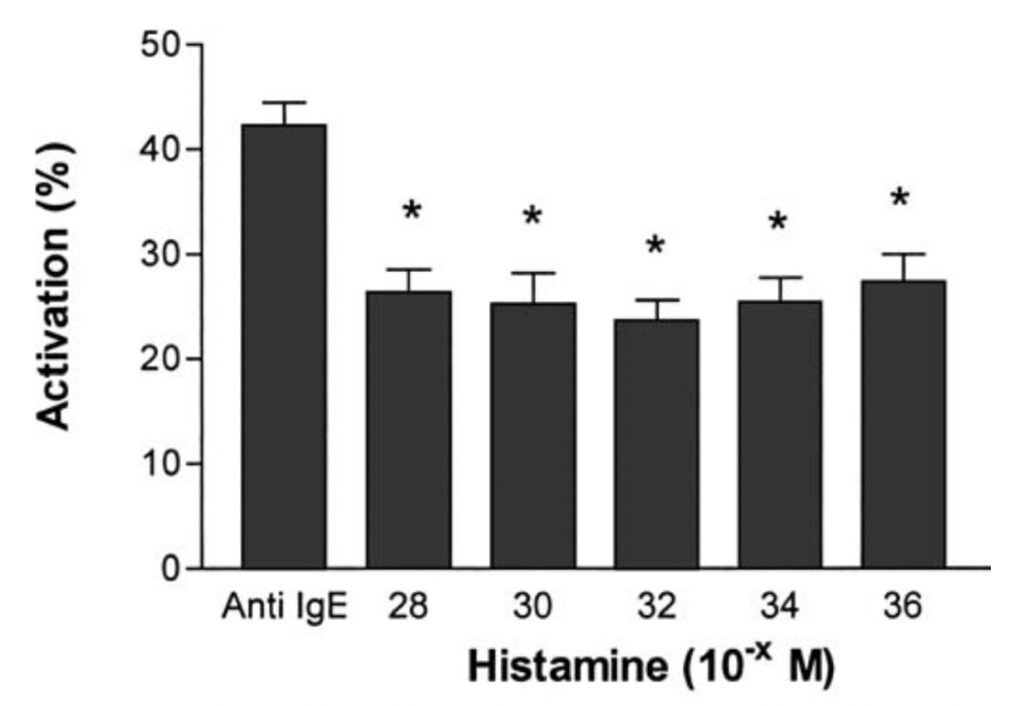
The maximum percent inhibition observed was 42.8% and the effects were reversed by the addition of ranitidine or cimetidine, which are antagonists of histamine. The highly diluted solutions were essentially free of active compound, and this supports the interpretation that somehow, the histamine effect was transmitted to the medium used for the preparation of the serial dilutions.
Various attempts to reproduce these data have been made. Guggisberg et al. (2005) found that histamine at the dilutions 10−2 M and 10−22 M was associated with a significant inhibition of basophil degranulation. This raises the question of why the experimental results differ between investigators. Guggisberg et al. (2005) concluded that “seemingly, minor variables of the experimental setup can lead to significant differences of the results if not properly controlled.” Importantly, Sainte-Laudy and Belon (2009) compared different analytic methods of basophil counting and showed that flow cytometry gave reproducible results with effects peaking between dilution steps 15 and 17 (C15–C17). They also showed that the effect was non-significant when histamine was replaced with histidine or cimetidine.
Studies on the physicochemical properties of homoeopathic (serially diluted) preparations have been thoroughly reviewed by Baumgartner and his team (Klein et al., 2018; Tournier et al., 2019; Tournier et al., 2021). Based on their review of 183 publications from 1970s until 2015, the authors concluded that the quality of publications increased sharply from year 2000 onwards with 48% of the publications rated as “high quality” during this later period (Klein et al., 2018). In their 2019 paper, they concluded that the most promising techniques for studying physicochemical properties of such preparations appeared to be nuclear magnetic resonance (NMR) relaxation, optical spectroscopy, and electrical impedance measurements (Tournier et al., 2019). The authors concluded that there is experimental evidence of specific physicochemical characteristics of homoeopathic preparations and discussed seven different theories for the possible mode of action. In the context of the present study, the weak quantum theory is the most interesting, suggesting that quantum-like entanglement takes place between the original substance and the final carrier (Tournier et al., 2021).
In accordance with the above-mentioned in vitro studies of highly diluted solutions, effects have been demonstrated in numerous clinical studies — including randomized, placebo-controlled, double-blind trials, and the results were further supported by several meta-analyses. A meta-analysis was conducted of four randomized clinical trials, wherein allergenic substances, homoeopathically diluted to C30 (resulting in an apparent “concentration” far beyond the Avogadro limit), were used as oral therapy against perennial allergic rhinitis. The results showed a mean symptom reduction of visual analogue scale scores of 28% for the homoeopathic drugs compared to 3% for the placebo, a highly significant result (p < 0.0007) (Taylor et al., 2000).
Due to the growing problem of antibiotic resistance, studies on homoeopathic treatment of infections are of particular interest. For example, a meta-analysis was conducted of three randomized clinical trials with identical basic study designs of diarrhea in children, aged 6 months to 5 years. Children were treated with an individually selected homoeopathic drug diluted to C30 or placebo measuring the duration of the disease as the primary outcome. The analysis showed a significant reduction in illness duration after the homoeopathic treatment (3.3 days) compared to the placebo group (4.1 days) (p = 0.008) (Jacobs et al., 2003). In a comprehensive review of six meta-analyses of clinical trials, Hamre et al. (2023) concluded that all meta-analyses showed significant effects of homoeopathy compared to placebo treatments. Based on prespecified criteria, the review included a total of 182 different clinical trials reported in 165 publications. The six meta-analyses comprised of two analyses in individualized therapy, one in standardized therapy, and three in various types of homoeopathic treatment. The review indicates that individualized as well as standard homoeopathic therapies provide clinical effects.
In conclusion, in vitro as well as in vivo effects of highly diluted compounds have been demonstrated in numerous studies. However, such effects are still considered controversial by most scientists, most likely because they conflict with the current paradigm of mechanistic effects, i.e. that therapeutic effects must remain bound to specific drug molecules and cannot be transferred to other media. This controversy is discussed further below.
Transfer of Biological Effects by Means of Electro-Activation
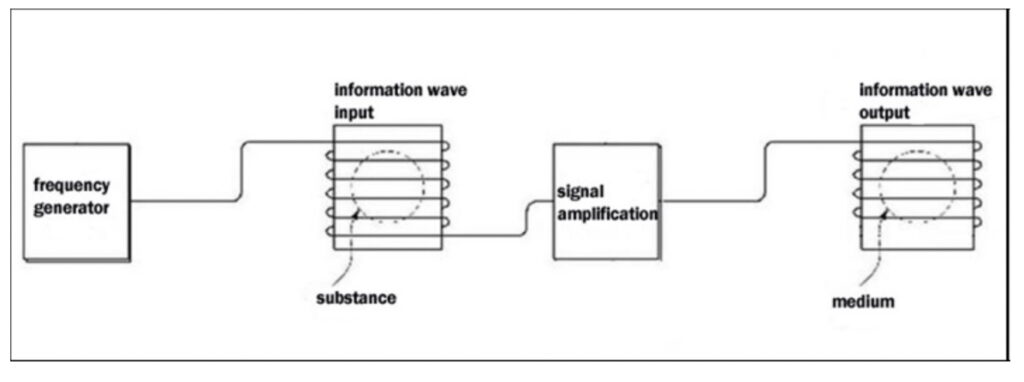
In recent years, different techniques have been investigated to produce results similar to those obtained by the serial dilution of drugs. These techniques exploit the interaction of electrodynamic fields with bioactive compounds. In a typical protocol (Figure 2), the compound to be investigated is placed in solution within a solenoid coil, and various electrodynamic frequencies are applied to the coil. The modified output signal from the coil is amplified and applied to a second coil containing pure water, which is subsequently investigated for biological effects. Several studies have demonstrated striking biological effects of electro-activated water samples prepared using this technique.
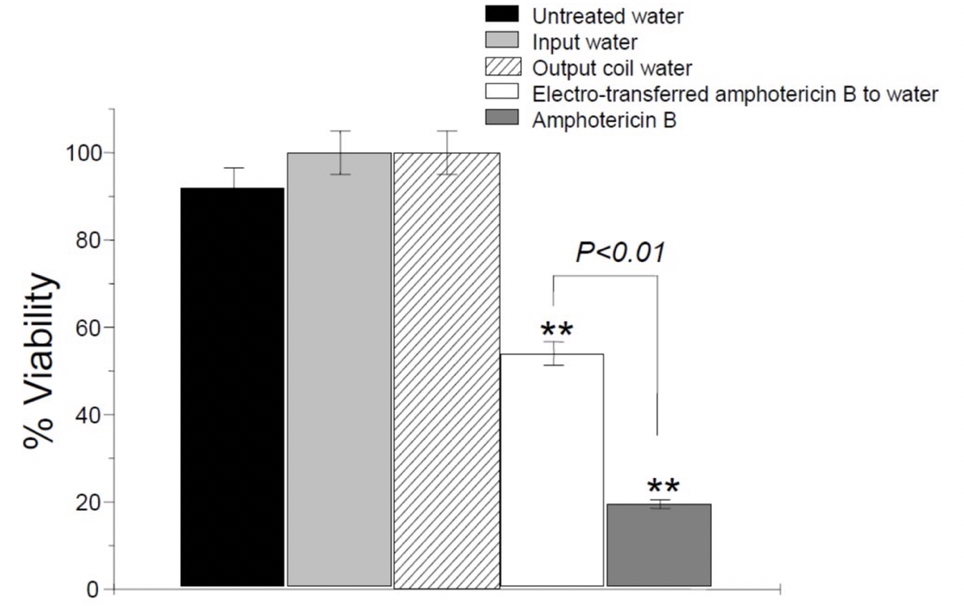
Amphotericin B is an antifungal which binds to ergosterol, a component of fungal cell membranes forming pores that cause rapid leakage of monovalent ions and subsequent fungal cell death. In a study of water imprinted with effects from amphotericin B, the viability of the fungus Candida albicans was investigated following incubation with the electro-activated water and compared to amphotericin B itself (Heredia-Rojas et al., 2012). The electro-activated water caused a significant reduction of 46% in C. albicans viability compared to 80% inhibition by amphotericin B alone (Figure 3). None of the control samples exhibited any significant effects.
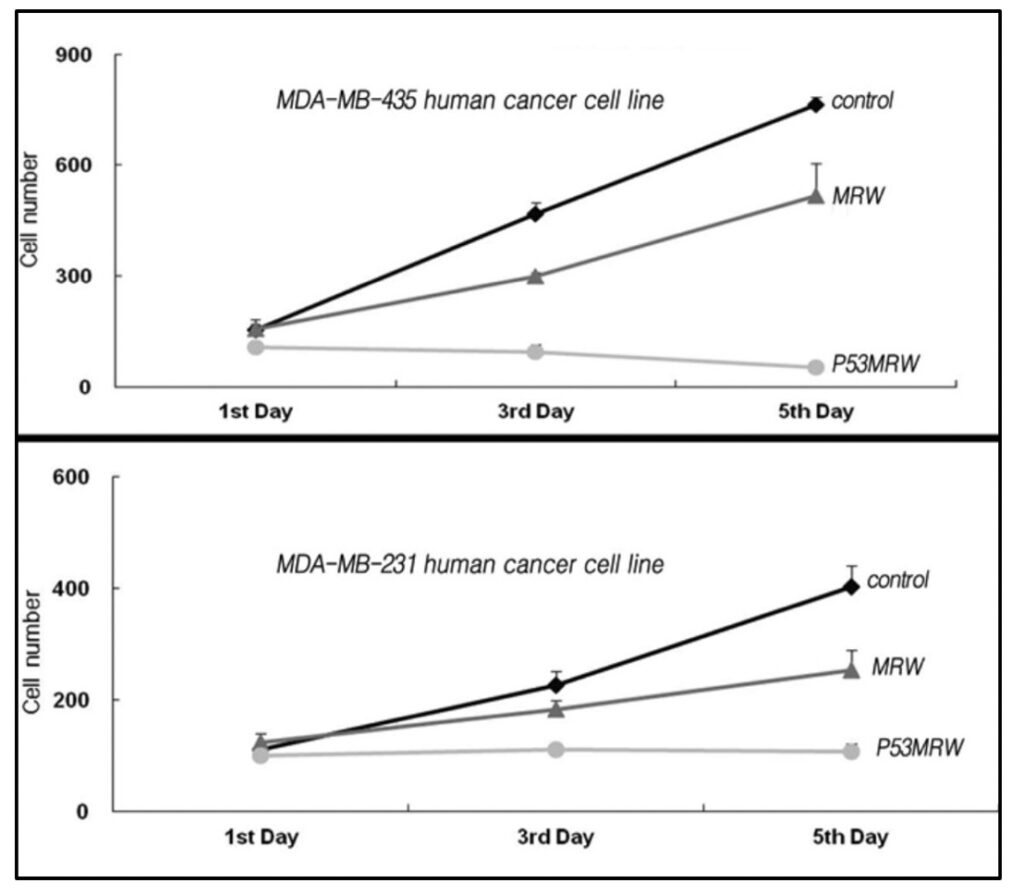
A study investigated the effects of electro-activated water on two cell lines of human breast cancer in vitro in combination with so-called mineral reduced water (MRW), which inactivates reactive oxygen (Kim, 2013). In the study, water was electro-activated using a transcription factor (P53) which functions as a potent tumor suppressor. Cancer cells were grown for 1–5 days in either regular medium, in the presence of MRW alone, or in the presence of MRW in combination with P53 electro-activated medium and were assessed for viability, apoptosis, and motility. The viability of both cell lines was somewhat inhibited in the presence of MRW itself but was almost completely blocked by MRW in combination with P53 electro-activated water (Figure 4). Moreover, the electro-activated water further stimulated the apoptosis and inhibited the motility of both cell lines compared to MRW alone.
Likewise, successful extraction and transfer of biological effects by means of electro-activation has been reported for vancomycin (Heredia-Rojas et al., 2015), metronidazole (Heredia-Rojas et al., 2011), and retinoic acid (Foletti et al., 2012, 2015). Unfortunately, no attempts by independent scientists to reproduce the studies of electro-activation have been published yet. Despite repeated reports of such far-reaching results, relatively little attention has been devoted to electro-activation, likely because it conflicts with the current paradigm in the life sciences.
The accumulated evidence of biological activity transferred from a substance to a different medium has led to suggestions of novel human treatment modalities. The efficacy and safety of such hypothetical treatments, termed Quantum Information Medicine (Norman et al., 2016), need to be investigated in-depth. However, it is tempting to speculate that electro-activation may pave the way for future therapeutics associated with fewer side effects and possibly holding improved absorption properties compared to traditional drug formulations.
Transduction of DNA Information by Electromagnetic Fields
Using a technique similar to that used in the electro-activation of water, Nobel laureate Luc Montagnier et al. (2015) demonstrated that information from DNA sequences could be extracted from fragments of DNA and subsequently transduced to water using a low (7Hz) frequency electromagnetic field. Following the addition of the reagents necessary for conducting Polymerase Chain Reaction (PCR), DNA strands with similar molecular weights to the original DNA fragments appeared in the imprinted water, although identity was not verified through sequencing. Moreover, electromagnetic signals from the DNA source were recorded as digital files and submitted via the internet to distantly located laboratories, where they were shown to imprint water with DNA information.
Importantly, transduction of DNA information via electromagnetic fields was confirmed by an independent team of researchers (Tang et al., 2019). Using extreme precautions to avoid DNA contamination, the team investigated significant factors impacting the transduction: It was found that by optimizing the experimental conditions, the success rate of transduction could be increased to above 85%, although false positives could not be completely avoided. It therefore appears, that further optimization of the technique is required to achieve full reproducibility.
Structured Water
Related to the transfer of biological effects to a carrier by serial dilution or electromagnetic activation are the findings of structured domains in water. Of note, Gerald Pollack and co-workers have studied the properties of so-called exclusion zones in water (also termed EZ water), which emerge in the vicinity of hydrophilic surfaces immersed in water (Zheng et al., 2006). As observed in the microscope, microspheres of approx. 1 µm in diameter are rapidly excluded from the water layer closest to the surface of an immersed gel such as NafionTM. Exclusion zones may form within seconds and develop to a thickness of more than 100 µm within a time frame of 5 min (Figure 5), remaining stable for hours.
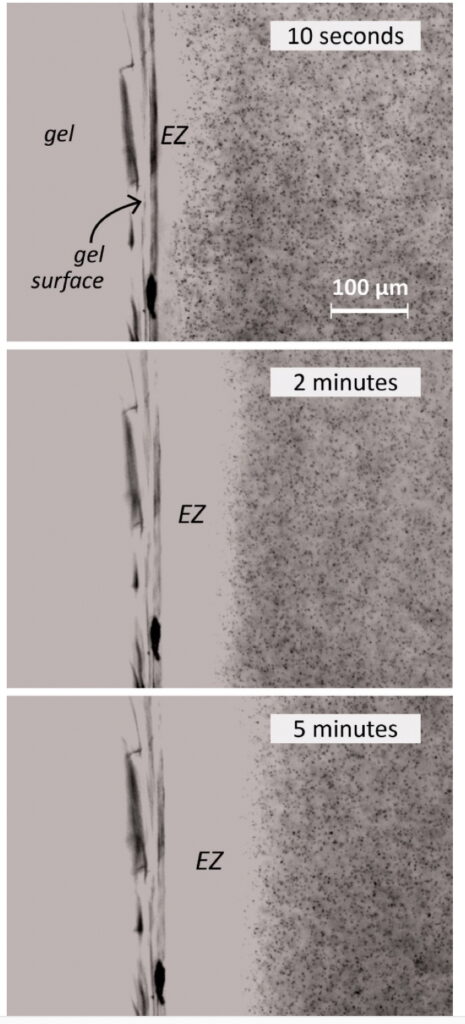
immersion of a hydrophilic gel into a suspension of 1 µm microspheres. The exclusion zone (EZ) appears within seconds and grows to about 100 µm within 5 min. Reproduced with permission from Pollack (2013).
EZ water has been shown to hold properties which differ from those of bulk water: it appears to have a higher density, a larger refractive index, and is associated with a higher degree of order than bulk water. Moreover, a negative electrical potential develops in the exclusion zone as a result of protons being excreted to the bulk water phase outside the zone. As a result, pH measurements revealed an acidic wave migrating from the exclusion zone into the bulk water phase following immersion of the above-mentioned hydrophilic gel. This process of separation of electrical charge requires input of energy, and the energy source for this was shown to be infrared irradiation from the surroundings. Based on its various observed characteristics, Pollack (2013) proposed a liquid crystalline structure of EZ water composed of layers of fused rings in a honeycomb pattern with a net composition of H3O2. However, more recently, several researchers have argued against this interpretation of the formation and structure of EZ water and have proposed alternative explanations, as reviewed by Elton et al. (2020).
Many researchers are actively studying phenomena in water related to the discovery of EZ water, as evidenced from conferences of the physics, chemistry, and biology of water, organized by Gerald Pollack. Whether the effects of highly diluted solutions could be explained by the appearance of exclusion zones in vivo remains to be seen, but exclusion zones have been shown to appear near biological surfaces which are abundant in living cells (Pollack, 2014).
Alternative proposals for mediators of high-dilution effects have been the appearance of coherence domains, which are hypothetical domains of clusters of water molecules behaving in a synchronized — or coherent — manner. The molecules in such domains are thought to fluctuate between ground and excited states under the influence of electromagnetic radiation (Bono et al., 2012). Such clusters may participate in a further level of coherence, through the interactions between a plurality of coherence domains, thereby reaching even larger volumes of structured water (Messori, 2019). The search for evidence of coherence domains is an active field of experimental research.
Regardless of the underlying mechanism(s), the findings regarding highly diluted solutions and structured water described here indicate that under some circumstances, water may be associated with subtle and dynamic processes beyond the well-known equilibria of dissociation and hydrogen binding of liquid water.
Biological Transmutation of Elements
The stability of elements over time — disregarding radioactive isotopes — is a well-established concept in physics and a key assumption in biology. It is well-known that the fusion of nuclei requires surmounting a considerable energy barrier due to the electrostatic repulsion of the positively charged nuclei. Consequently, such processes are considered highly unlikely in a physical environment at normal temperature and pressure.
Non-radioactive elements are also assumed to be stable in living organisms, and numerous experiments have been interpreted over the years, based on this assumption, which is still considered a cornerstone in the paradigm of life science. However, during the 19th and 20th century, several scientists, such as Baranger and Kervran, presented data to suggest that transmutation of elements actually does occur in plants and animals under some circumstances (Biberian, 2012). Unfortunately, these studies have been largely ignored by modern science.
In recent years, the work of Vysotskii and Kornilova has provided a considerable amount of data to support the notion of biological transmutation. Importantly, these studies used selective, modern analytical techniques in contrast to previous studies. Many of their studies were carried out using microorganisms. In a typical study protocol, a culture of microorganisms is grown in a well-characterized medium under controlled conditions and following incubation, cells are separated from nutrients by centrifugation, rinsed in water, and finally dried. In studies of iron isotopes, the residue is ground into powder and analyzed by Mössbauer spectroscopy. Typically, the residue is further processed for analysis by time-of-flight (ToF) mass spectrometry.
As one example, the transmutation of a manganese isotope (Mn55) to the rare iron isotope Fe57 was studied in several bacteria as well as yeast cultures. Cultures were grown in the presence of MnSO4 and heavy water (D2O) in media essentially free of iron (Vysotskii and Kornilova, 2013). As seen in Figure 6, mass spectra of Saccharomyces cerevisiae grown for 72 hours indicated the appearance of the rare Fe57 isotope present only in cultures exposed to both Mn55 and D2O.
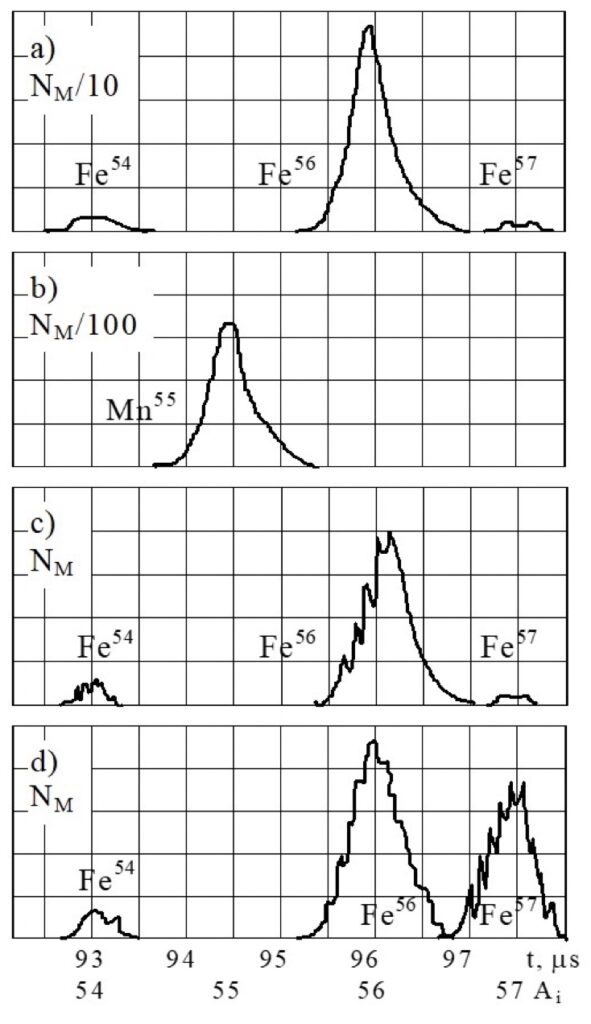
enrichment of Fe57 occurred. d) Mass spectrum from experiments with S. cerevisiae grown with D2O and manganese showing increased content of Fe57. Reproduced with permission from Vysotskii and Kornilova (2013).
The proposed nuclear reaction responsible for these findings is the fusion of manganese nuclei with nuclei of deuterium (d2):
Mn55 + d2→Fe57
In a separate experiment, cultures of Bacillus subtilis were grown in an iron-deficient medium containing controlled quantities of Na23 and P31 (Vysotskii and Kornilova, 2010). Following this, elevated amounts of Fe54, which existed only in trace amounts in the nutrient, were detected by mass spectrometry in the presence of both Na23 and P31. Contrary to this, no increase in Fe54 was observed in the absence of P31.
The proposed reaction to account for these findings was:
Na23 + P31→ Fe54
In addition to transmutation of stable isotopes, microorganisms appeared to influence the decay of radioactive isotopes. In experiments with Cs137, a highly toxic waste product from nuclear reactors, a mixture of microorganisms (“Microbial Catalyst-Transmutator,” MCT), accelerated the radioactive decay at various degrees depending upon the chemical composition of the media (Vysotskii and Kornilova, 2010, 2013). As seen in Figure 7, the apparent half-life of the decay of Cs137 could be substantially reduced from the “natural” half-life of approximately 30 years to 310 days in the presence of CaCO3. Similar results — though less effective — were observed in the presence of KCl or NaCl or without addition of mineral salts.
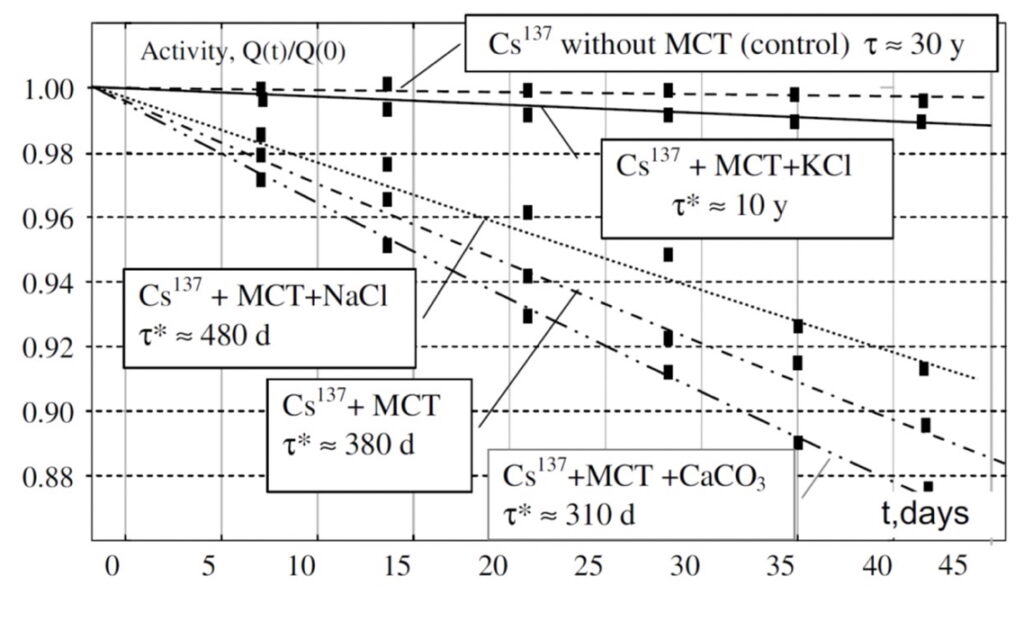
The proposed reaction responsible for these observations was the fusion of a Cs137 nucleus with a proton, although the formation of barium was not confirmed experimentally:
Cs137 + p1 → Ba138
Importantly, the accelerated decay of Cs137 by microorganisms has subsequently been confirmed by independent scientists (Yum et al., 2019).
Entanglement in Living Organisms
In a remarkable study of the effects of X-ray irradiation in fish, evidence was presented to suggest the occurrence of entanglement between groups of fish in vivo (Mothersill et al., 2018). Rainbow trout or zebra fish which had been irradiated with X-rays were subsequently allowed to swim for 2 hours with groups of identical species which had not been irradiated. As a result, after swimming together in a container in which they were separated only by a mesh, the two groups acquired similar radiation effects. Hence, the irradiated group appeared to transmit the radiation effects to the non-irradiated group, a phenomenon known as the bystander effect. Surprisingly, when the sequence was reversed and the two groups of fish were swimming together before irradiation of one of the groups, the non-irradiated group again displayed similar radiation effects as the irradiated group although they had not been physically close during and after irradiation. The authors suggested that the two groups had been coupled in a kind of entanglement during and following the pretreatment phase of the experiment. Other mechanisms such as quantum tunnelling have also been suggested to account for these findings (Matarèse et al., 2023).
Perspectives: an Expanded View of Quantum Biology
Almost a century after the birth of quantum mechanics, biology has partly adopted quantum concepts such as the delocalized and wave-like nature of chemical substances. This development has given rise to quantum biology as a distinct scientific discipline which aims to apply quantum concepts for the understanding of phenomena which can otherwise not be understood. Quantum biology is still in its infancy as a small community with limited impact on life science, a situation which is likely to change over time.
However, an ever-increasing amount of empirical data has emerged to pose even more serious challenges to the foundation of modern life science. As shown here, these challenges point towards more radical revisions of some of the basic scientific concepts, and we propose a view of quantum biology which is expanded to such an extent that it represents a step forward towards an entire shift of paradigm. Table 2 summarizes key features of an expanded paradigm, which we should like to propose.
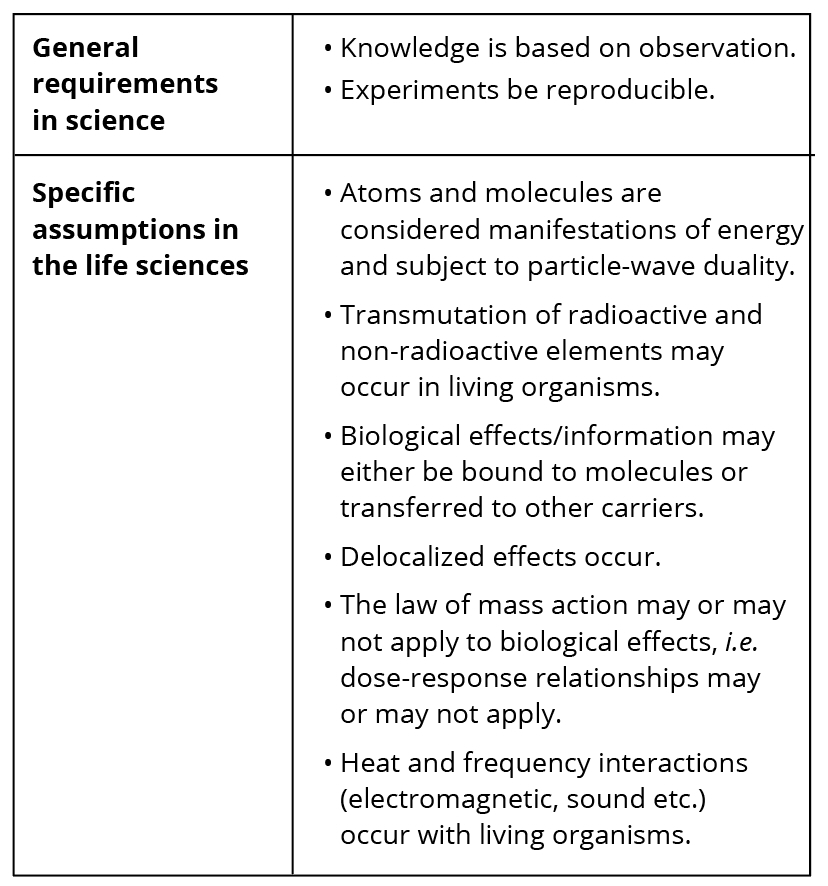
Any new paradigm in science should comprise the previous paradigm as a special case, and this is met for our proposed revision (Table 2). Importantly, the requirement that science be based on observation is crucial and should be reinforced going forward. The tendency to reject empirical findings based on current understanding (Mukerji and Ernst, 2022) should be carefully reconsidered. It represents an unscientific approach which neglects the requirement of observed data behind scientific knowledge. Likewise, the classical requirement that empirical results be reproducible is a prerequisite for drawing general conclusions and should be retained with the limitations which may occur during the initial studies of a phenomenon. During this phase, it may not be possible to control for all factors of importance, as they may only be partly known. Although this seems of particular importance for the subtle phenomena encountered in quantum biology, such limitations eventually need to be resolved.
One crucial concept here is the model of molecules commonly used in chemistry and biology. These are usually depicted as consisting of solid spheres — representing atoms — which are connected by chemical bonds depicted as sticks. Such models have proven useful for describing the structure and stoichiometry of chemical reactions, but they remain models based on 19th century’s science and, therefore, do not do justice to the diversity and dynamics encountered in recent experiments, some of which are reviewed here.
An alternative and more realistic view of molecules is that they represent various forms of energy, forms which in some situations behave as localized particles and in others as waves which are delocalized in space. By adopting such characteristics of matter in biology, it appears logical also to accept a broader understanding of biological effects: effects may be mediated either by local effects, such as direct interactions between a molecule and a receptor, or by delocalized effects, e.g. by carriers such as water which have been imprinted with effects extracted from biologically active compounds. The former represents the majority of drugs in common use today, whereas the latter includes ultra-high dilutions and electro-activated preparations. Effects of the latter clearly defy the law of mass action, and hence dose-dependency. Currently, demonstration of dose-dependencies is required for regulatory approval of new drugs, which makes sense for classical drugs involving local effects of a chemical compound. However, for ultra-high dilutions or electro-activated preparations for which “concentrations” of chemical reactants are either null or very low, dose-dependency in the classical meaning of the wording does not make sense and therefore does not apply.
As pointed out in our suggestion for an expanded paradigm (Table 2), local and non-local drug effects are not mutually exclusive, but are considered to be in action side-by-side, although they obey different laws of action. Exemplified in a series of 10-fold dilutions of a drug substance (from D1, D2, D3 up to D30), a dose-effect relationship is to be expected for the initial dilutions containing active concentrations (e.g. D1, D2, D3 up to D6). Contrary to this, at higher dilutions, other factors will determine the effects. Hence, the effects of ultra-high dilutions depend on the actual dilution (or potentiation) step (e.g. D7, D8, D9 up to D30). For electro-activated preparations, the factors determining biological effects remain to be established.
Biological transmutations pose another serious challenge to current scientific understanding. It seems inevitable that quantum mechanics is at play in understanding such transmutations, and quantum tunnelling is one possible explanation for the phenomena’s occurrence. Nuclei of stable elements are generally considered to be resistant to nuclear reactions due to energy barriers caused by electrostatic repulsion. Such barriers need to be overcome for transmutation to occur. In the current paradigm, nuclear reactions are believed to occur only under extreme conditions. However, living cells somehow appear to be able to utilize quantum tunnelling to penetrate electrostatic barriers at ambient temperatures. This calls for a whole new research area to elucidate to what extent — and under which conditions — plants, animals, and humans utilize such transmutations as supplements to their metabolic reactions. Hence, it will be important to define the borders between conditions with and without the occurrence of transmutation.
Discussion
The overall objective of life science is to provide new insight into living nature as well as to develop applications in health care, nutrition, and biotechnology based on such insight. Scientific progress is an intricate balance between adopting new ideas based on experimental data and holding on to well-established knowledge. At times, this balance suffers from an overly conservative attitude among scientists, and in such situations, science itself becomes a barrier to innovation and new insight (Cooper, 2017).
As shown here, by ignoring the quantum nature of substance, life science has neglected a range of empirical data which do not comply with widely adopted scientific understandings. A variety of mechanisms — psychological barriers as well as resource limitations — may be at play in such a conservative approach. Importantly, the human mind tends to hold on to previously acquired knowledge, and moreover, some scientists may be hampered by fear of cognitive dissonance and of losing face in front of colleagues. Equally important perhaps is the issue of funding. Public and private funding organizations often rely on established scientists for evaluating applications for research grants, although some foundations now allocate funding for unconventional projects. Such an approach is likely to provide a broader scientific insight and should be expanded onwards.
The paradigm proposed here is unlikely to be adopted in the short term given its current opposition from the scientific community as well as from media. A reversal of this over time will require new attempts to reproduce crucial experiments and to thoroughly characterize the conditions and properties of non-classical, strange phenomena. The study by Tang et al. (2019) in their attempt to reproduce the transfer of information from DNA to water as reported by Montagnier et al. (2015) is a textbook example of an effort to characterize a non-classical effect in which extreme precautions were taken to rule out experimental pitfalls. Moreover, in vitro results should be projected to in vivo evaluations to elucidate practical applications of the findings. This is still in its infancy.
Conclusions
We have presented experimental evidence to suggest that quantum biology has the potential to develop into a broader discipline than is currently the case, and we have suggested key features of a life science paradigm allowing for the study of phenomena which have hitherto been dismissed as impossible or even pseudoscientific.
It is to be expected that new avenues for the prevention and treatment of disease will emerge, once such a paradigm gains widespread acceptance, as pointed out by Goh et al. (2020). We suggest that candidates for such treatments are those based on physical mechanisms, such as heat, magnetism, and sound, as well as on electromagnetic and other fields.
Of particular interest are the prospects of electro-activated media, e.g. water, for human therapy. This technology represents opportunities for medical treatments based on biologically active compounds which themselves are unsuited for human treatment due to issues with drug formulations, prohibitive toxicities, or — for antibiotics — due to the risk of antimicrobial resistance. Future research is required to map out the basic characteristics as well as the clinical effects and safety profiles of such preparations.
Furthermore, the recognition and intensified study of a range of existing complementary treatments are likely to ensue, which applies to traditional Western (e.g. homoeopathy) as well as Asian therapies.
Conflict of Interest Statement
SHI is retired from Novo Nordisk A/S and holds stock in the company. He is presently involved in biological applications of scalar fields. PAP is retired from Weleda AG and holds stock in the company.
Contribution of Authors
SHI outlined the concept of the paper and wrote the original draft. SHI and PAP contributed to writing of the following drafts as well as review and editing.
Funding
No funding contribution is declared.
References
Al-Khalili J, McFadden J, 2015. Life on the Edge, the Coming of Age of Quantum Biology. Black Swan Edition, Penguin Random House, London.
Arndt M, Nairz O, Vos-Andreae J, Keller C, van der Zouw G, Zeilinger A (1999). Wave–particle duality of C60 molecules. Nature 401: 680–682.
Arndt M, Juffmann T, Vedral V (2009). Quantum physics meets biology. HFSP J. 3(6): 386–400.
Ball P (2011). Physics of life: The dawn of quantum biology. Nature 474: 272–4.
Belon P, Cumps J, Ennis M, Mannaioni PF, Sainte-Laudy J, Roberfroid M, Wiegant FAC (1999). Inhibition of human basophil degranulation by successive histamine dilutions: Results of a European multi-centre trial. Inflam Res 48: 17–18.
Belon P, Cumps J, Ennis M, Mannaioni PF, Roberfroid M, Sainte-Laudy J, Wiegant FAC (2004). Histamine dilutions modulate basophil activation. Inflam Res 53(5): 181–188.
Biberian JP (2012). Biological Transmutations: Historical Perspective. J. Condensed Matter Nucl. Sci. 7: 11–25.
Bohr N, 1971. Quoted in: Heisenberg W. Physics and Beyond. (Harper & Row) p. 206.
Bono I, Del Giudice E, Gamberale L, Henry M (2012). Emergence of the Coherent Structure of Liquid Water. Water 4: 510-532.
Brookes JC, Hartoutsiou F, Horsfield AP, Stoneham AM (2007). Could humans recognize odor by phonon assisted tunneling? Phys Rev Lett. 98: 038101.
Brookes JC (2017). Quantum effects in biology: golden rule in enzymes, olfaction, photosynthesis and magnetodetection. Proc R Soc A 473: 20160822.
Cao J, Cogdell RJ, Coker DF, Duan HG, Hauer J, Kleinekathöfer U, Jansen TLC, Mančal T, Miller RJD, Ogilvie JP, Prokhorenko VI, Renger T, Tan HS, Tempelaar R, Thorwart M, Thyrhaug E, Westenhoff S, Zigmantas D (2020). Quantum biology revisited. Sci Adv. 6: eaaz4888.
Cooper S, 2017. The concepts of Ludwik Fleck and their application to the eukaryotic cell cycle. Studia Historiae Scientiarum 16: 335–364.
Davenas E, Beauvais F, Amara J, Oberbaum M, Robinzon B, Miadonna A, Tedeschi A, Pomeranz B, Fortner P, Belon P, Sainte-Laudy J, Poitevin B, Benveniste J (1988). Human basophil degranulation triggered by very dilute antiserum against IgE. Nature 333: 816–818.
Elton DC, Spencer PD, Riches JD, Williams ED (2020). Exclusion Zone Phenomena in Water — A Critical Review of Experimental Findings and Theories. Int. J. Mol. Sci. 21: 5041.
Foletti A, Ledda M, D’Emilia E, Grimaldi S, Lisi A (2012). Experimental finding on the electromagnetic information transfer of specific molecular signals mediated through the aqueous system on two human cellular models. J. Altern. Complement. Med. 18: 258–61.
Foletti A, Ledda M, Grimaldi S, D’Emilia E, Giuliani L, Liboff A, Lisi A (2015) The trail from quantum electro dynamics to informative medicine. Electromag. Biol. Med. 34(2): 147–150.
Gerlich S, Eibenberger S, Tomandl M, Nimmrichter S, Hornberger K, Fagan PJ, Tüxen J, Mayor M, Arndt M (2011). Quantum interference of large organic molecules. Nat Commun. 2: 263. doi.org: 10.1038/ncomms1263
Goh BH, Tong ES, Pusparajah P (2020). Quantum Biology: Does quantum physics hold the key to revolutionizing medicine? Prog Drug Discov Biomed Sci 3(1): a0000130.
Guggisberg AG, Baumgartner SM, Tschopp CM, Heusser P (2005). Replication study concerning the effects of homeopathic dilutions of histamine on human basophil degranulation in vitro. Complement. Ther. Medi. 13(2): 91–100.
Hamre HJ, Glockmann A, von Ammon K, Riley DS, Kiene H (2023). Efficacy of homoeopathic treatment: Systematic review of meta-analyses of randomised placebo-controlled homoeopathy trials for any indication. Syst Rev. 12(1): 191.
Heredia-Rojas JA, Torres-Flores AC, Rodríguez-De la Fuente AO, Mata-Cárdenas BD, Rodríguez-Flores LE, Barrón-González MP, Torres-Pantoja AC, Alcocer-González JM (2011). Entamoeba histolytica and Trichomonas vaginalis: trophozoite growth inhibition by metronidazole electro-transferred water. Exp. Parasitol 127: 80–3.
Heredia-Rojas JA, Gomez-Flores R, Rodríguez-De la Fuente AO, Monreal-Cuevas E, Torres-Flores AC, Rodríguez-Flores LE, Beltcheva M, Torres-Pantoja AC (2012). Antimicrobial effect of amphotericin B electronically activated water against Candida albicans. Afr. J Microbiol. Res. 6: 3684–3689.
Heredia-Rojas AC, Villarreal L, Rodríguez de la Fuente AO, Herrera-Menchaca L, Gomez-Flores R, Mata-Cárdenas BD, Rodríguez-Flores LE (2015). Antimicrobial effect of Vancomycin electro-transferred water against methicillin-resistant Staphylococcus aureus variant. Afr. J. Tradit. Complement. Altern. Med. 12: 104–8.
Hore PJ, Mouritsen H (2022). The Quantum Nature of Bird Migration. Sci. Am. April: 27–31.
Jacobs J, Jonas WB, Jimérez-Pérez M, Crothers D (2003). Homeopathy for childhood diarrhea: combined results and metaanalysis from three randomized, controlled clinical trials. Pediatr. Infect. Dis. J. 22(3): 229–34.
Kim WH (2013). New Approach Controlling Cancer: Water Memory. Fluid Mech Open Acc 1: 104–112.
Klein SD, Würtenberger S, Wolf U, Baumgartner S, Tournier A (2018). Physicochemical Investigations of Homeopathic Preparations: A Systematic Review and Bibliometric Analysis — Part 1. J. Altern. Complement. Med. 24: 409–421.
Kuhn TS, 1970. The Structure of Scientific Revolutions, second ed. University of Chicago Press.
Lambert N, Chen Y-N, Cheng Y-C, Li C-M, Chen G-Y, Franco N (2013). Quantum biology. Nature Phys 9: 10–18.
Maddox J, Randi J, Stewart WW (1988). “High-dilution” experiments a delusion. Nature 334: 287–290.
Marais A, Adams B, Ringsmuth AK, Ferretti M, Gruber JM, Hendrikx R, Schuld M, Smith SL, Sinayskiy I, Krüger TPJ, Petruccione F, van Grondelle R (2018). The future of quantum biology. J. R. Soc. Interface 15: 20180640.
Matarèse BFE, Rusin A, Seymour C, Mothersill C (2023). Quantum Biology and the Potential Role of Entanglement and Tunneling in Non-Targeted Effects of Ionizing Radiation: A Review and Proposed Model. Int. J. Mol. Sci. 24: 16464.
Matson J (2012). Quantum teleportation achieved over record distances. Nature.
McFadden J, Al-Khalili J (1999). A quantum-mechanical model of adaptive mutations. BioSystems 50: 203–211.
Messori, C (2019). The Super-Coherent State of Biological Water. Open Access Libr. J. 6: e5236.
Montagnier L, Del Giudice E, Aïssa J, Lavallee C, Motschwillerd S, Capolupoe A, Polcarig A, Romanog P, Tedeschii A, Vitielloe G (2015). Transduction of DNA information through water and electromagnetic waves. Electromagn. Biol. Med. 34: 106–112.
Mothersill C, Smith R, Wang J, Rusin A, Fernandez-Palomo C (2018). Biological Entanglement–Like Effect After Communication of Fish Prior to X-Ray Exposure. Dose-Response 16(1).
Mukerji N, Ernst E (2022). Why homoeopathy is pseudoscience. Synthese 200, 394: 1–29.
Norman RL, Dunning-Davies J, Heredia-Rojas JA, Foletti A (2016). Quantum Information Medicine: Bit as It — The Future Direction of Medical Science: Antimicrobial and Other Potential Nontoxic Treatments. World J. Neurosci. 6: 193–207.
Planck M (1944). The Nature of Matter, A speech in Florence, Italy.
Pollack GH, 2013. The Fourth Phase of Water: Beyond Solid, Liquid, and Vapor. Ebner and Sons Publishers, Seattle, Washington.
Pollack GH (2014). Cell electrical properties: reconsidering the origin of the electrical potential. Cell. Biol. Int. 39: 237–242.
Sainte-Laudy J, Belon P (2009). Inhibition of basophil activation by histamine: a sensitive and reproducible model for the study of the biological activity of high dilutions. Homeopathy 98(4): 186–97.
Seifi M, Soltanmanesh A, Shafiee A (2022). Quantum coherence on selectivity and transport of ion channels. Sci Rep 12: 9237.
Tang BQ, Li T, Bai X, Zhao M, Wang B, Rein G, Yang Y, Gao P, Zhang X, Zhao Y, Feng Q, Cai Z, Chen Y (2019). Rate limiting factors for DNA transduction induced by weak electromagnetic field. Electromagn. Biol. Med. 38: 55–65.
Taylor MA, Reilly D, Llewellyn-Jones RH, McSharry C, Aitchison TC (2000). Randomised controlled trial of homeopathy versus placebo in perennial allergic rhinitis with overview of four trial series. BMJ 321(7259): 471–6. Erratum in: BMJ 2000;321(7263):733.
Tournier A, Klein SD, Würtenberger S, Wolf U, Baumgartner S (2019). Physicochemical Investigations of Homeopathic Preparations: A Systematic Review and Bibliometric Analysis-Part 2, J. Altern. Complement. Med. 25: 890–901. .
Tournier A, Klein SD, Würtenberger S, Baumgartner S (2021). Physicochemical Investigations of Homeopathic Preparations: A Systematic Review and Bibliometric Analysis-Part 3, J. Altern. Complement. Med. 27: 45–57.
Vattay G, Kauffman S, Niiranen S (2014). Quantum Biology on the Edge of Quantum Chaos. PLoS One 9(3): e89017.
Vysotskii VI, Kornilova AA, 2010. Nuclear Transmutation of Stable and Radioactive Isotopes in Biological Systems. Pentagon Press LLP, New Delhi.
Vysotskii VI, Kornilova AA (2013). Transmutation of stable isotopes and deactivation of radioactive waste in growing biological systems. Ann. Nucl. Energy 62: 626–633.
Wang Y, Hu Y, Guo JP, Gao J, Song B, Jiang L (2024). A physical derivation of high-flux ion transport in biological channel via quantum ion coherence. Nat Commun. 15: 7189.
Yum K-J, Lee JM, Bahng GW, Rhee S (2019). An Experiment in Reducing the Radioactivity of Radionuclide (137Cs) with Multi-component Microorganisms of 10 Strains. J. Condensed Matter Nucl. Sci. 28: 1–6.
Zheng J-m, Chin W-C, Khijniak E, Khijniak E, Pollack GH (2006). Surfaces and interfacial water: Evidence that hydrophilic surfaces have long-range impact. Adv Colloid Interface Sci. 127: 19–27.
Discussion with Reviewers
Reviewer 1: “In a study of water imprinted with effects from amphotericin B, the viability of the fungus Candida albicans was investigated following incubation with the electro-activated water and compared to amphotericin B itself (Heredia-Rojas et al., 2012).” Was there a control using an inactive form of amphotericin B?
Authors: As mentioned in the legend to Figure 3, the three control samples were without effect. A control sample with inactive amphotericin would have been of value but was not included in the study.
Reviewer 1: “Likewise, successful extraction and transfer of biological effects by means of electro-activation has been reported for vancomycin (Heredia-Rojas et al. 2015), metronidazole (Heredia-Rojas et al. 2011), and retinoic acid (Foletti et al. 2012).” Did any of these papers have a control in which an inactive version of the molecule was used?
Authors: None of these studies included inactive versions of the molecules. However, in an additional paper by Foletti et al. (2015), shielding of the electromagnetic signals during electro-activation was shown to remove the effects on cell proliferation.
Reviewer 1: In Montaigner et al. (2015), the authors write “after 40 PCR cycles of amplification the original DNA was detected, as shown by a specific band in gel electrophoresis of the expected molecular weight.” If this ‘DNA’ was not sequenced, they might mention this since it is conceivable that the treatment simply generated a fragment of the same size as the original but with no sequence similarity. This criticism might be levelled at the Tang et al. (2019) paper too.
Authors: We agree that a band with the expected molecular weight does not constitute final proof of identity and have mentioned the lack of sequencing in the revised manuscript.
Reviewer 1: “Pollack (2013) proposed a liquid crystalline structure of EZ water composed of layers of fused rings in a honeycomb pattern with a net composition of H3O2” The interpretation of these results has been criticized. The authors might cite these criticisms and the rebuttals, e.g.:
Elton DC, Spencer PD, Riches JD, Williams ED (2020). “Exclusion Zone Phenomena in Water — A Critical Review of Experimental Findings and Theories.” Int. J. Mol. Sci. 21: 5041.
Florea D, Musa S, Huyghe JMR, Wyss HM (2014). “Long-range repulsion of colloids driven by ion exchange and diffusiophoresis.” Proc Natl Acad Sci 111(18): 6554–6559.
Sordello F (2025). “Established electrochemistry theory rules out the existence of exclusion-zone water at polarized Pt electrodes.” Chem Phys Lett 865: 141920.
Authors: We agree that criticism of the exclusion zone phenomena should be considered and have referred to the Elton et al. (2020) review paper in the revised manuscript.
However, we consider an in-depth discussion of this to be outside the scope of our paper.
Reviewer 1: The authors might mention how quantum effects have been invoked (or could be invoked) to explain: the action of restriction enzymes (Kurian et al.); possible communication between irradiated cells and non-irradiated neighbors (Mothersill et al.); peptide synthesis by ribosomes (Acosta-Silva et al.); the ideas of Hameroff, Tuszynski, and collaborators on collective dipole interactions in tubulin etc. (e.g. https://doi.org/10.1038/s41598-017-09992-7); and sonic communication between bacteria (Matsuhashi et al.).
Authors: Thank you, we appreciate these suggestions.
We find the papers of Mothersill et al. (2018; 2023) highly interesting and relevant and have referred to them in a new section “Entanglement in living organisms.”
Kurian et al. (2016), who proposed a quantum mechanical model for collective electronic behavior in the DNA helix, where dipole-dipole oscillations are quantified through boundary conditions imposed by the enzyme, is relevant. However, we already have examples of coherence and therefore refrain from referring to this. The paper of Acosta-Silva et al. (2012) on quantum-mechanical mechanisms of peptide bond formation is interesting and relevant, but we prefer to refrain from further expanding the number of quantum biological examples.
The paper of Craddock et al. (2017) deals with the effect of anesthetics, substances with a clear dose-response relationship and therefore beyond the scope of our article. Matsuhashi et al. published a paper in 1995 demonstrating a “totally new” phenomenon — a signal that crosses from one petri dish to another. Later (1998), however, they presented evidence that this effect is mediated by sound waves, and therefore is beyond the scope of our article.
Reviewer 2: There must be some acknowledgement and understanding of the conditions for a paradigm shift in science. Paradigm shifts define boundaries: Newton is not valid as speeds approach the speed of light, classical physics breaks down when uncertainties approach Planck’s constant, and so on. This provides a fit between old and new and an understanding of the scope of the respective paradigms. The reason for skepticism regarding the proposed extension of quantum biology is that this supposed new paradigm is not defined by a boundary. What is the parameter? You cannot establish a new paradigm without this — it is just a number of unrelated observations awaiting explanation. This should be admitted.
To put this a bit differently: Physics is quantum, hence so is biochemistry. The issue is under what circumstances does a classical model begin to apply. Otherwise, every odd observation (telepathy, spoon bending) can be “explained” by entanglement; this does not establish them as a discipline (or paradigm).
Authors: This discussion seems very important, and we have changed the Perspectives section accordingly. Here we can add some experiments which have been done to test the difference between substantial amounts of a substance with a biological effect, and the serially diluted substance (Pelikan W in: Itschner V (ed): Potenzierte Heilmittel. Verlag freies Geistesleben, Stuttgart 1971. p. 74-81). For the dilutions D1, D2, D3, and D4 of heavy metals corresponding to the concentrations 10%, 1%, 0.1%, and 0.01%, a declining inhibitory effect on the growth of plants was demonstrated. To test the effect of the potentization process, Pelikan (1971) made an experiment with nitrate of lead in the potencies D8-D19 on the one hand, and the dilutions with other proportions between substance and medium as 1+9 ppm on the other hand. The result was that the effect on growth of plants depended on the number of dilutions, not of the “concentration.” Perhaps this experiment is able to contribute an answer to your question “What is the parameter?” Here, substantial amounts (D1–D4) give classical effects, whereas D8–D19 give quantum effects. The limit is very different for different substances.
Reviewer 3: Could you expand on the Yum et al. 2019 study on the decay of Cs137 by microorganisms—was Ba138 found, and, if so, how?
Authors: It appears that neither Vysotski nor Yum et al. confirmed the appearance of Ba138. The reaction was suggested by Vysotski based on energetic considerations.
Reviewer 3: You make a case for why the door for a paradigmatic shift should be at least not locked and perhaps even ready to be opened. Does it not require a set of experiments that replicate key findings and build on that all the way to practical, even medicinal applications? In your opinion, what would this process look like? What experiments, where, and by whom? What would constitute undeniable results?
Authors: We agree and respond to this under Perspectives. Here, we can add that we do hope that our article can give an incentive to do research and help to get funding. Who could do the research? Some experiments could be done by the working group of Stephan Baumgartner (Institute of Complementary and Integrative Medicine, Faculty of Medicine, University of Bern, Bern, Switzerland).