

Water Structuring Device Increases Growth of Plant Sprouts Exposed to Nonthermal Levels of Wireless Communication Radiation: A Pilot Study
Rubik, B*
Institute for Frontier Science, 6114 LaSalle Ave PMB 605, Oakland, CA 94611 USA
*Corresponding Author email: brubik@earthlink.net
Keywords: wireless; Wi-FiTM; radiofrequency; microwave; seed; sprout; pea; red clover; water structurizer; structured water
Submitted: May 31, 2025
Revised: August 3, 2025
Accepted: August 27, 2025
Published: October 8, 2025
Abstract
The purpose of this study was to investigate the effect of a purported water structuring device on germination and sprout growth of unirradiated and Wi-FiTM exposed organic peas and red clover seeds. A commercial product, the Amezcua BioDisc-3 by QNet, was used. Peas and red clover seeds were grown under controlled laboratory conditions of light, temperature, and hydration. Irradiated samples were continuously exposed to pulsed radiation (100 mW/m2, 2.45 and 5.8 GHz carrier waves) from an idling Wi-FiTM router, and unirradiated samples were exposed to the laboratory’s ambient wireless communication radiation background of 10-4 mW/m2. For both exposure conditions, test samples received continuous BioDisc-3 treatment while controls received no treatment. Filtered municipal tap water was used. Sprouts were comparatively assessed by photography, germination time, fresh weight, and dried biomass at the end of the experiments. No differences were found in germination time for treatment or control samples. Wi-FiTM exposed pea and red clover sprouts were generally smaller in appearance and had reduced fresh weight compared to unirradiated sprouts, replicating findings by others. BioDisc-3 treatment significantly enhanced the growth of pea and red clover sprouts in both unirradiated and Wi-FiTM exposed conditions, increasing fresh weights of the sprouts differentially for the two species, with greater effects on peas. At the endpoint, BioDisc-3 treatment yielded 11.9% and 11.8% greater dried biomass for unirradiated and Wi-FiTM exposed peas, respectively; and 3.7% and 4.0% greater dried biomass for unirradiated and Wi-FiTM exposed red clover, respectively. Therefore, BioDisc-3 enhanced sprout growth of both species for both radiation exposure conditions.
Introduction
Wireless communication radiation in the environment has dramatically increased in recent years due to the rapid expansion of wireless technology, including fifth generation (5G), and the “Internet of Things.” Mobile phones and Wi-FiTM routers, which emit digitally pulsed microwaves even when idle, are among the most prevalent communication devices worldwide. The radiation from such devices has been shown to produce a wide variety of adverse effects on humans and other organisms (Web reference 1). Reviews of the literature have been published (Cucurachi et al., 2013; Levitt et al. 2021; 2022; Seker et al., 2022).
Although it is well accepted that adverse health effects occur when microwave exposure levels are high enough to heat tissue, most regulatory agencies do not consider the nonthermal biological effects from low power densities. However, thousands of scientific papers report adverse health effects from extremely low levels of wireless communication signals on numerous organisms, including those at 2.45 GHz (Web reference 1; Russell, 2018; Prlić et al., 2022).
Among these thousands of research reports, only relatively few have examined the effects of wireless communication radiation exposure on plants. This is a systemic stressor for plants with a differential impact depending upon the plant family, growth stage, exposure duration, frequency, and power density, among other factors (Majd et al., 2012; Vian et al., 2016). Comprehensive reviews on the effects of electromagnetic fields, including microwave radiation, on plants have been published (Vian et al., 2016; Halgamuge, 2017; Levitt et al., 2021; Levitt et al., 2022). Several studies, in particular, examined seed germination and/or plant growth when exposed to 2.45 GHz, one of the beacon signals from Wi-FiTM routers. Continuous Wi-FiTM exposure reduced the growth of garden cress (Lepidium sativum), broccoli (Brassica oleracea), red clover (Triflolium pratense) and pea (Pisum savitum), and decreased total biomass as well as dried weight biomass, but did not affect seed germination (Havas and Symington, 2016). A study by Alattar et al. (2017) on plant seedlings reported that continuous Wi-FiTM exposure significantly decreased the water content of corn (Zea mays), basil (Ocimum basilicum), and eggplant (Solanum melongena) seedlings, and reduced the fresh weight of corn and basil plants. Another study on corn exposed to Wi-FiTM showed that growth and development were initially stimulated but then suppressed (Roche et al., 2020). In a study on bean plant growth, bean seeds were germinated and exposed to 0, 1, 2, or 3 Wi-FiTM routers. A dose-response retardation of plant growth was reported, with three routers inhibiting bean plant growth the most, and the control (no router) yielding the highest growth (Yuwono and Bekhri, 2016).
In this study we posed the research question: Does a purported water structurizer (aka a device that structures water) impact seed germination and sprout growth, when (1) exposed continuously to Wi-FiTM radiation from a router, and (2) unirradiated (i.e., exposed to ambient low-level microwave radiation)? We utilized pea and red clover seeds under similar radiation exposure conditions used by Havas and Symington (2016) who reported reduced sprout growth. 2.45 GHz is a beacon signal emitted by Wi-FiTM routers, and is the same frequency used in microwave ovens at a much higher power density to cook food, since it is strongly absorbed by water. We investigated the impact of a purported water structuring device, the Amezcua BioDisc-3 (Web reference 2) on germination time, sprout growth, and morphology.
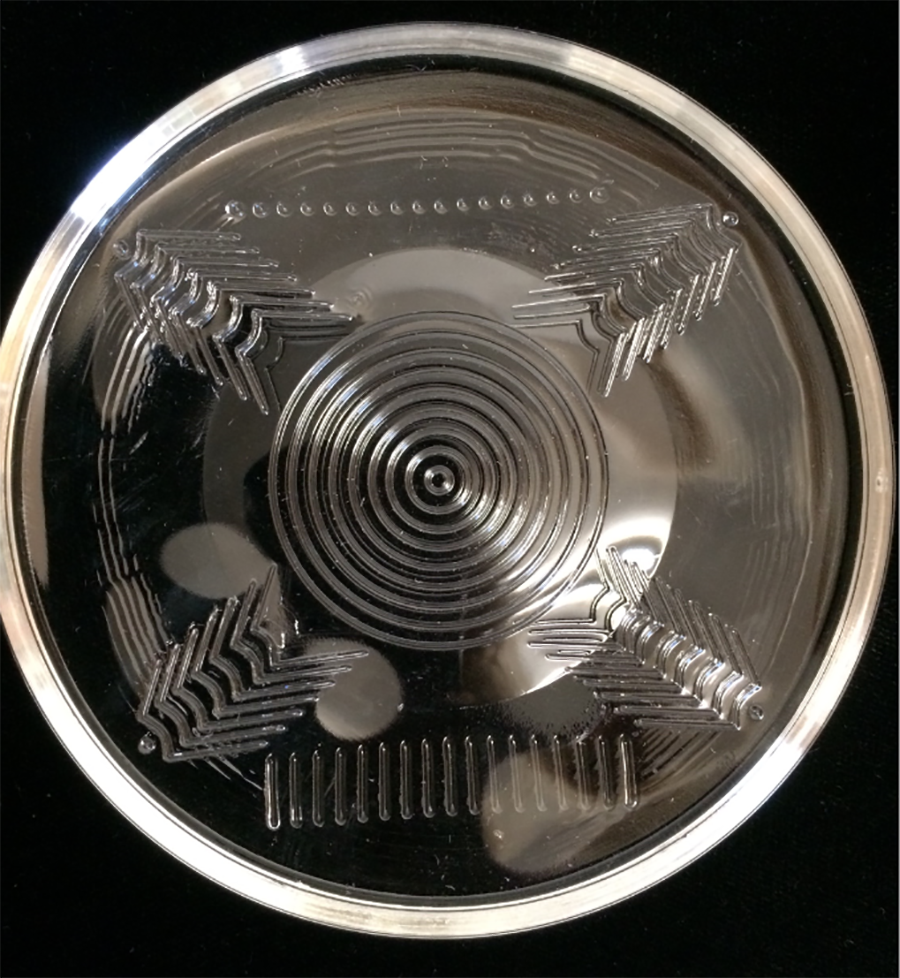
BioDisc-3 is a commercial device that has been previously found to impact the energetics of water and plant growth in studies conducted by several researchers. It is a 9-cm diameter concave disk, 8 mm thick, which is clear and glass-like, composed of natural granular crystals, including quartz and diamond. It is unpowered but activated by a proprietary energetic process. BioDisc-3 also features several geometric relief designs on the top and bottom, which are considered informationally active. This product has been tested in controlled studies on water treatment where it was shown to promote better hydration in humans (Korotkov et al., 2019); alter specific physical properties of water; and boost rye and oat seed germination and plant growth (Korotkov, 2019). Water in a transparent container placed on top of a BioDisc-3 was shown to become structured by the electrophotonic imaging method (Korotkov, 2019). In another study, BioDisc-3 was shown to impact chiral symmetry breaking in sodium chlorate crystals formed in aqueous solution, resulting in a greater percentage of d– over l-crystals (Rubik, 2021). A recent study on various drinking waters revealed that BioDisc-3 increased the pH and alkalinity of water, increased the electrical conductivity of water, and enhanced the chemical activity of dissolved minerals, while also exhibiting a potential antibacterial effect (Adebayo et al., 2025). Altogether, these findings suggest that BioDisc-3 treatment increases water structuring.
Methods
Sample Preparation and Handling for Germination and Sprout Growth
A series of plant experiments on the two plant species was conducted in the laboratory under controlled conditions of temperature, lighting, hydration, and exposure to electric, magnetic, and electromagnetic fields. The study was conducted from June to August of 2022. Municipal tap water in Emeryville, California (Web reference 3), which had been filtered through charcoal, was used in all experiments to germinate and grow sprouts.
Organic pea (Pisum Sativum) seeds were procured from HandyPantry.com. Twenty-four samples consisting of 40 randomly selected peas were each placed in twenty-four 90 x 15 mm polystyrene petri dishes, with 12 samples randomly assigned to the Wi-FiTM exposure group, and the other 12 samples assigned to the unirradiated group. Six samples in each of the Wi-FiTM exposed and unirradiated groups were treated using a BioDisc-3 placed directly under each of the petri dishes, which were the same diameter, while controls were placed on cardboard. Wi-FiTM exposure and BioDisc-3 treatment of samples were employed for the duration of the experiment, except for brief periods for photographing and weighing the samples.
Organic red clover (Trifolium pretense) seeds were also procured from HandyPantry.com. Since these seeds are very small, samples were prepared by weighing the seeds on a Mettler AE50 microbalance to 1.5 g per sample, with a standard error of 0.0003 g. Twenty-four samples consisting of 1.5 g of red clover seeds were each placed in twenty-four 90 x 15 mm polystyrene petri dishes, with 12 samples randomly assigned to the Wi-FiTM exposure group, and the other 12 samples assigned to the unirradiated group. Six samples in each of the Wi-FiTM exposure and non-exposure groups were treated using BioDiscs placed directly under each of the petri dishes of the same diameter, while controls were placed on cardboard. Wi-FiTM exposure and BioDisc-3 treatment of samples were employed for the duration of the experiment, except for brief periods for photographing and weighing the samples.
Each petri dish bottom was numbered, pre-weighed, and the initial weights of seeds in each sample were also recorded, such that the weights of sprouts in each sample could be measured over time.
Table 1 presents the overall study design and sample distribution in each group. Figure 1 shows a photograph of the Amezcua BioDisc-3.

To initiate germination of the peas, 20 mL of filtered municipal tap water was transferred by pipette to each sample. The petri dishes were then placed in darkness under light-tight cardboard boxes in different rooms of the laboratory under controlled conditions. For the samples exposed to Wi-FiTM, the distance from the router ranged from 26 to 32 cm. The non-Wi-FiTM exposure samples were exposed to very low ambient microwave radiation with no wireless emitters in the room. Daily photographs of the sprouts were made, and then 5 mL of water was deposited on each sample by pipette. The samples treated by BioDisc-3 were interspersed with untreated samples in a checkerboard pattern. The samples in each group were rotated around in the boxes each day to compensate for any potential differences in growth conditions, including slight variations in humidity and microwave power density.
Pea samples were kept in darkness for 6 days at 21–23 oC for germination and then uncovered and exposed to light-to-dark periods of 14 to 10 hours, respectively, for 7 more days. Samples were photographed and weighed prior to any water addition from Day 8 – Day 13. On Day 13, final fresh weights were measured. Due to the absence of plant food or soil substrate, the growth phase of the sprouts was halted on Day 13 by no further addition of water. The samples were then dried overnight in an oven at 105 oC and cooled to room temperature before measurement of the dried weight biomass.
Experiments with red clover seeds were similar to peas. However, because the seeds are much smaller, only 1.5 g of seeds and only 5 mL of water per sample were used initially for germination. Darkness was maintained for only 4 days because germination was faster. Samples were photographed and weighed daily from Day 5 – Day 7, prior to water addition, during the growth phase. On Day 7, final fresh weights were measured, and the growth phase of the sprouts was halted by no further addition of water. The samples were then dried overnight in an oven at 105 oC and cooled to room temperature before the dried weight biomass was measured.
For samples in each group, mean values of fresh and dried weights and their standard deviations were determined. One-tailed t-tests were used to determine p-values and statistical significance assuming unequal variance (Havas and Symington, 2016).
Electromagnetic Field Exposure Measurements
Using a Cornet ED-88T Plus 5G Electrosmog tri-field meter, the electric field was 6.4 V/m; the magnetic field, 2.4 mGauss; and the radiofrequency field 100 mW/m2 for the Wi-FiTM exposed samples. For the unirradiated samples exposed to the ambient radiofrequency background, the electric field was 6.0 V/m; the magnetic field, 1.5 mG, and the radiofrequency field was 10-4 mW/m2.
The Wi-FiTM exposed samples were placed 26-32 cm from a Linksys EA7500 Wi-FiTM router bearing 3 omnidirectional antennas. The device was idling—powered, but neither uploading nor downloading data. Wi-FiTM is a wireless network protocol, part of which requires an access point (e.g. a Wi-FiTM router) to broadcast a beacon signal 10 times per second to announce its presence. This beacon signal consists of a burst of microwave radiation with digital modulation. Most modern wireless routers are dual-band, which means they can operate simultaneously in the 2.45 GHz and the 5.8 GHz band. Both carrier frequencies broadcast beacon signals 10 times per second with a duration of 2.5 ms and 0.4 ms in the 2.45 GHz and the 5.8 GHz band, respectively. This beacon radiation pattern is optimal to produce a consistently repeating Wi-FiTM signal over time.
To analyze the actual radiation pattern of the Wi-FiTM exposed samples, a special RF-detector circuit had to be built. This circuit amplified the microwave signal received from a broadband antenna up to 8 GHz and rectified it. The resulting output of this circuit was a DC waveform representing the envelope of the received microwave power density.
A Tektronix TDS2014B oscilloscope, which can display a waveform in the time domain, was used for further analysis. Figure 2 shows oscillograms of the “pulsed” 2.45 GHz radiofrequency signal, each “pulse” actually being a burst of the carrier wave. The upper image shows the 10 Hz beacon signal (10 pulses per second) while the lower image depicts the detail of the carrier wave burst. The 5.8 GHz signal exhibits a similar pattern but was omitted for clarity.

Results
Germination
Germination time was essentially the same for all pea samples (Day 5) and for all red clover samples (Day 3). Exposure to Wi-FiTM with or without BioDisc-3 treatment had no apparent effect on germination time or the initial morphology of the sprouts.
Sprout Growth
Pea Sprouts, Unirradiated. Day 1 shows initial mean weights of the dry seeds of the 2 groups. Days 2–7 are before germination or showing very tiny sprouts that were not weighed. Fresh weight of sprouts was measured on Days 8–13. See Figure 3. Growth was terminated on Day 13.

On Day 13, the growth phase was stopped; the samples were oven dried overnight; and the dried weight biomass was measured. Table 2 shows the dried weight values, along with a summary of the fresh sprout weight data and statistics. There was no significant difference in the initial dry seed weight for the 2 groups. Significant differences in sprout weight were found for all subsequent growth days. The percent difference of fresh sprout weight varied between 17.25-33.65%, with an average of 21.30%, whereas dried weight difference was 11.87%.
Figure 4 is a photograph of the unirradiated pea sprouts on Day 13 comparing a control with a BioDisc-3 treated sample.


Pea Sprouts exposed to Wi-FiTM. Day 1 shows initial means weights of seeds in the 2 groups. Days 2–7 are days before germination or showed the presence of very tiny sprouts that were not weighed. Fresh weight of sprouts was measured on Days 8–13. See Figure 5.
On Day 13, the growth phase was stopped, and the samples were oven dried overnight, cooled to room temperature, and the dried weight biomass was measured. Table 3 shows the dried weights, along with a summary of the fresh sprout weight data and statistics. There was no significant difference in the initial dry seed weight for the 2 groups. Significant differences in sprout weight were found for all subsequent growth days. The percent difference of fresh sprout weight varied between 7.19%–28.40%, with an average difference of 19.82%. Dried weight difference was 11.77%.
Figure 6 shows a photograph of the Wi-FiTM exposed pea sprouts on Day 13 comparing a BioDisc-3 treated sample (left) with a control (right). The control sprouts appear less robust with some apparent rot.


Clover Sprouts, Unirradiated. Day 1 shows initial mean weights of the dry seeds of the 2 groups. Days 2–4 are days before germination or showing very tiny sprouts that were not weighed. Fresh weight of sprouts was measured on Days 5–7. See Figure 7.
On Day 7, the growth phase was stopped, the samples oven dried, and the dried weight biomass was measured. Table 4 shows the dried weight values, final water weight, along with a summary of the fresh sprout weight data and statistics. There was no significant difference in the initial dry seed weight for the 2 groups, and Day 5 showed only a trend. Day 6 showed a significant difference, while Day 7 showed only a trend. Days 6 and 7 showed that BioDisc-3 treatment was associated with significantly greater fresh sprout weight, which varied between 18.76% and 37.30%, with an average difference of 22.51%. Overall, treatment using BioDisc-3 showed greater sprout growth with greater water content (58.46%), but only slightly increased dried biomass (3.65%).
Figure 8 is a photograph of red clover sprouts on Day 7 comparing a control with a BioDisc-3 treated sample. Although it is hard to see any difference, the weight measurements are significantly different.


Red Clover Sprouts, Wi-FiTM Exposed. Day 1 shows the initial mean weights of the 2 groups. Days 2–4 are days before germination or showed very tiny sprouts that were not weighed. Fresh weight of sprouts was measured on Days 5–7. See Figure 9.
On Day 7, the growth phase was stopped, and the samples were oven-dried overnight, cooled to room temperature, and weighed. Table 5 shows the dried weight values and final water weight, along with a summary of the fresh sprout weight data and statistics. There was no significant difference in the initial dry seed weight for the 2 groups. Days 5, 6, and 7 showed significant differences, and the difference in dried weights and water weights was also significant. Overall, treatment using BioDisc-3 with Wi-FiTM exposure showed greater sprout growth with higher water content over dried biomass. The percent difference of fresh sprout weight varied between 33.60% and 51.78%, with an average difference of 41.9%. The dried weight difference was 3.96% and the final water weight difference was 44.10%.
Table 5 shows a considerable difference in fresh sprout weights compared to Table 4. However, different lots of red clover seeds from the same supplier were used in each of these experiments, which could account for this difference.
Figure 10 is a photograph of red clover sprouts on Day 7, comparing a BioDisc-3 treated sample (left) and control (right), both exposed to Wi-FiTM.


Summary of Results
1. Germination times of pea and red clover seeds were unaffected by BioDisc-3 treatment or Wi-FiTM exposure.
2. BioDisc-3 treatment significantly enhanced the growth of pea and red clover sprouts for both unirradiated (ambient field, 10-4 mW/m2) and Wi-FiTM exposed (100 mW/m2) conditions. Fresh weights of the sprouts for both exposure conditions were increased differentially for the two species, with greater effects on peas.
3. Morphological differences between BioDisc-3 treated and control sprouts were apparent in most cases, with the treatment group yielding larger, more robust sprouts compared to controls.
4. Wi-FiTM exposed pea sprouts did not exhibit phototaxis (orientation to light source), with or without BioDisc-3 treatment, whereas unirradiated pea sprouts did display phototaxis.
5. While several control pea sprout samples exhibited some apparent rot, BioDisc-3 treated samples remained fresh without any sign of rot.
6. BioDisc-3 treatment yielded 11.9% more dried weight and 47.1% more water weight for unirradiated peas; and 11.8% more dried weight and 46.9% more water weight for Wi-FiTM exposed peas.
7. BioDisc-3 treatment yielded 3.7% more dried weight and 58.5% more water weight for unirradiated red clover; and 4% more dried weight with 44.1% more water weight for Wi-FiTM exposed red clover.
8. Overall, pea and red clover sprouts exposed to two different nonthermal levels of wireless communication radiation, in the presence of BioDisc-3, a purported water structurizer, grew measurably faster and appeared more robust than controls.
Discussion
There was an improvement in sprout growth from BioDisc-3 treatment at two different nonthermal levels of wireless radiation—100 mW/m2 and 10-4 mW/m2. Although the “unirradiated” condition at 10-4 mW/m2 is six orders of magnitude lower than the Wi-FiTM exposure, it is, nonetheless, an electromagnetic stressor. This ambient exposure is 1010 times greater than Earth’s natural background. Moreover, building biologists consider this ambient level a “severe anomaly,” while nowadays it is a typical ambient level for interior environments (Web reference 4). These results suggest a different mechanism of action of BioDisc-3 and Wi-FiTM radiation on the sprouts, even if both interventions are related to the structuration of water.
It is generally accepted that structured water is present in organisms. Structured water dynamics are expected to influence bioenergetics in vivo and therefore numerous biological processes. Moreover, water structure is affected by applied electromagnetic fields. There is evidence for nonthermal effects of low-level microwaves on water structure by Raman spectroscopy, showing effects on the network of hydrogen bonds (Rao et al., 2010). This includes long-term changes in the structure of water exposed to 2.45 GHz (Yakunov et al., 2017). Electromagnetic stress from microwaves may impact the structured water in organisms, thereby secondarily affecting numerous biochemical reactions and leading to various adverse bioeffects. Microwaves can disrupt hydrogen bonding in water molecule clusters, especially at interfaces with biomolecules, potentially destabilizing polymer chains or cluster integrity that affect cellular functions (Nikiforov et al., 2016; Dawkins et al., 1979). We speculate that BioDisc-3 alleviated, at least in part, the adverse effects of wireless communication radiation exposure by preserving or increasing the concentration or signaling processes of structured water in the sprouts, thereby improving biological function and enhancing growth.
Generating structured water in vitro typically involves one or more energetic processes, such as static or dynamic magnetic fields (Minoretti et al., 2024), vortex dynamics (Gao et al., 2021), ultrasound (Shamsipur et al., 2018), infrared radiation (Chai et al., 2009), application of certain electromagnetic frequencies (Han et al., 2023), and partial electrolysis with ionization (Saitta et al., 2012), among other methods. Yet BioDisc-3 is a passive, unpowered device that apparently produces structuring of water by indirect contact—that is, by simply placing water in containers on top of the disk. The mechanism of action of BioDisc-3 on water is poorly understood, although several physical, chemical, and biological effects have been reported. It may involve extremely subtle energy fields imbued with information that act over short distances. A possible related phenomenon is the transfer of biochemical signals from highly dilute solutions to water across a non-liquid barrier (Jerman et al., 2024; 2025).
Similar growth-enhancing effects on plants without direct contact have previously been reported. An effect on sprout growth involving action-at-a-distance was demonstrated by Sharma and Pollack using Qelby® ceramic powder in a noncontact manner. Wet or dry Qelby® powder, previously shown to produce exclusion zone (EZ) water and to enhance plant growth, was placed outside vials containing chickpea seeds and acted nonlocally to enhance sprout growth (Sharma et al., 2017). Rubik and Jabs (2016) found that sprouting and growing beans under an open wooden pyramid for 1 month produced 19% more dried weight biomass than controls.
There is increasing evidence that information may be transmitted to water by weak electromagnetic signals. Del Giudice et al. (1988), among others, have proposed how quantum electrodynamics may explain action-at-a-distance involving coherence and information transfer in water. According to Del Giudice, water may be partially comprised of coherent domains, supramolecular structures subject to the influence of weak electromagnetic fields, which are fundamentally involved in living systems as well as in water’s response to subtle external influences (Madl and Renati, 2023; Renati and Madl, 2024). Experiments in which vials of pure water are placed near other vials of water containing DNA show that information transfer can occur between the vials, such that DNA of the same sequence can be synthesized in the other vials without any material transfer (Montagnier et al., 2009).
More evidence is accumulating that water has a memory of the fields impressed upon it from its environment. Various energy fields stimulate water in organisms, including natural and artificial fields. Natural fields, such as Schumann resonance of the earth and the biofields of living organisms, may structure water. For instance, hydronium ions (H3O+) resonate at 7.85 Hz, which increases water structure (Mohri et al., 2003).
Water may lose some of its inherent life-supporting information when exposed to a toxic electromagnetic field such as wireless communication radiation. Then, when used to hydrate a plant, information from the toxin-imprinted water may diminish the bio-information in the plant’s biofield and biowater, thus thwarting plant vitality. This may be fundamental to the numerous adverse biological effects on plants from electropollution, such as increased oxidative stress, altered gene expression, DNA damage, chloroplast damage, and metabolic and structural changes. Any or all of these adverse effects may impact plant growth and promote disease and dieback. Structured water that is enhanced with information to support life may reduce or prevent such adverse effects by reinforcing life-supporting information, despite the presence of continuous electromagnetic stress.
Such protection may go beyond electromagnetic stress. Plants irrigated with structured water have shown greater resilience to stressors such as drought (Ramsey, 2023a; 2023b; 2023c). Moreover, plants with higher levels of hydrogen-bonded structured water also exhibit higher levels of resilience to stress (Muncan et al., 2022; Moyankova et al., 2023). Thus, water structuring technologies may have practical applications in agriculture to promote plant resilience to water stress and boost crop yields.
Conclusions
BioDisc-3 treatment significantly enhanced the growth of pea and red clover sprouts that were continuously exposed to wireless radiation, at both an ambient level of exposure and direct exposure to a Wi-FiTM router.
Conflict of Interest Statement
The author declares that she has no competing financial interests or personal relationships that could have appeared to influence the work reported in this paper.
References
Adebayo AH, Obode OC, Adekeye BT, Durodola B (2025). Assessment of physicochemical and antibacterial properties of structured water samples from Ota, Ogun State, Nigeria. Scientific African 1(27), e02533.
Alattar EM, Elwasife KY, Radwan ES, Elrifi YA (2017). Response of corn (Zea Mays), basil (Ocimum Basilicum), and eggplant (Solanum Melongena) seedlings to Wi-Fi radiation. Romanian Journal of Biophysics 27(3, 4): 137-150.
Chai B, Yoo H, Pollack GH (2009). Effect of radiant energy on near-surface water. The Journal of Physical Chemistry B 113(42): 13953-13958.
Cucurachi S, Tamis WLM, Vijver MG, Peijnenburg WJGM, Bolte, JFB, de Snoo GR (2013). A review of the ecological effects of radiofrequency electromagnetic fields (RF-EMF). Environmental International 51: 116-140.
Dawkins AW, Nightingale NR, South GP, Sheppard RJ, Grant EH (1979). The role of water in microwave absorption by biological material with particular reference to microwave hazards. Phys Med Biol 24(6): 1168-76.
Del Guidice E, Preparata G, Vitiello G (1988). Water as a free electric dipole laser. Physical Review Letters 61: 1085-1088.
Gao Y, Fang H, Ni K. (2021) A hierarchical clustering method of hydrogen bond networks in liquid water undergoing shear flow. Sci Rep. 11(1): 9542.
Halgamuge MN (2017). Weak radiofrequency radiation exposure from mobile phone radiation on plants. Electromagnetic Biology and Medicine 36(2): 213-235.
Han G, Liu F, Zhang T, Xu W, Zhang Y, Wu N, Ouyang S (2023). Study of microwave non-thermal effects on hydrogen bonding in water by Raman spectroscopy. Spectrochim Acta A Mol Biomol Spectrosc 285: 121877.
Havas M, Symington MS (2016). Effects of Wi-Fi radiation on germination and growth of broccoli, pea, red clover, and garden cress seedlings: a partial replication study. Current Chemical Biology10(1): 65-73.
Jerman I, Ogrizek L, Krapež VP, Jan L (2024). Molecular Signal Transfer of Highly Diluted Antibodies to Interferon-Gamma Regarding Kind, Time, and Distance of Exposition. International Journal of Molecular Sciences 25(1): 656.
Jerman I, Ogrizek L, Pihir J, Senica M (2025). Interactions of highly hiluted Arnica montana extract with water across glass interfaces. International Journal of Molecular Sciences 26(3): 1115.
Korotkov K (2019). Study of structured water and its biological effects. International Journal of Complementary and Alternative Medicine 12(5): 168-172.
Korotkov KG, Churganov OA, Gavrilova EA, Belodedova MA, Korotkova AK (2019). Influence of drinking structured water to human psychophysiology. J Applied Biotechnol Bioeng 6(4): 171-177.
Levitt BB, Lai H, Manville AM (2021). Effects of non-ionizing electromagnetic fields on flora and fauna, part 1. Rising ambient EMF levels in the environment. Reviews on Environmental Health 37(1): 81-122.
Levitt BB, Lai HC, Manville AM (2022). Effects of non-ionizing electromagnetic fields on flora and fauna, Part 2 impacts: how species interact with natural and man-made EMF. Reviews on Environmental Health 37(3): 327- 406.
Madl, P, Renati, P (2023). Quantum electrodynamics coherence and hormesis: foundations of quantum biology. International Journal of Molecular Sciences, 24(18): 14003.
Majd A, Nejadsattari T, Arbabian S (2012). Study of effects of extremely low frequency electromagnetic radiation on biochemical changes in Satureja bachtiarica. International Journal of Scientific and Technology Research 1(7): 77-82.
Minoretti P, Emanuele E (2024). From agriculture to clinics: unlocking the potential of magnetized water for planetary and human health. Cureus 16(7): e64104.
Mohri K, Fukushima M (2003). Milligauss magnetic field triggering reliable self-organization of water with long-range ordered proton transport through cyclotron reso-nance. IEEE Transactions on magnetics 39(5): 3328-30.
Montagnier L, Aissa J, Ferris S, Montagnier JL, Lavalleee C (2009). Electromagnetic signals are produced by aqueous nanostructures derived from bacterial DNA sequences, Interdisciplinary Sciences: Computational Life Sciences 1(2): 81-90.
Moyankova D, Stoykova P, Veleva P, Christov NK, Petrova A, Atanassova S (2023). An Aquaphotomics Approach for Investigation of Water-Stress-Induced Changes in Maize Plants. Sensors 23(24): 9678.
Muncan J, Jinendra BM, Kuroki S, Tsenkova R (2022). Aquaphotomics research of cold stress in soybean cultivars with different stress tolerance ability: early detection of cold stress response. Molecules 27(3): 744.
Nikiforov VN, Ivanov AV, Ivanova EK, Tamarov KP, Oksengendler BL (2016). On a possible mechanism of the effect of microwave radiation on biological macromolecules. Biofizika 61(2): 255-8.
Prlić I, Šiško J, Varnai VM, Pavelić L, Macan J, Kobešćak S, Hajdinjak M, Jurdana M, Cerovac Z, Zauner B, Mihić MS, Avdagić SC (2022). Wi-Fi technology and human health impact: a brief review of current knowledge. Arh Hig Rada Toksikol 73(2): 94-106.
Ramsey CL (2023a). Biologically structured water (BSW)-A Review (Part 1): Structured Water (SW) Properties, BSW and Redox Biology, BSW and Bioenergetics. Journal of Basic and Applied Sciences 19: 174-201.
Ramsey CL (2023b). Biologically Structured Water-A Review (Part 2): Redox Biology, Plant Resilience, SW Drinking Water Types, BSW Water and Aging, BSW Water and Immunity. Journal of Basic & Applied Sciences 19: 207-29.
Ramsey CL (2023c). Magnetized seeds and structured water: effects on resilience of velvet bean seedlings (Muuma pruriens) under deficit irrigation. Journal of Basic and Applied Sciences 19: 249-70.
Rao ML, Sedlmayr SR, Roy R, Kanzius J (2010). Polarized microwave and RF radiation effects on the structure and stability of liquid water. Current Science 98(11): 1500-4.
Renati, P, Madl, P (2024). What is the “hydrogen bond”? A QFT-QED perspective. International Journal of Molecular Sciences 25(7): 3846.
Rubik B (2021). Effects of subtle external stimuli on chiral symmetry breaking during crystallization of sodium chlorate from aqueous solution. Water: A Multidisciplinary Research Journal 12: 1-11.
Rubik B, Jabs H (2016). Interaction of pyramidal structures with energy and consciousness. Cosmos and History: Journal of Natural and Social Philosophy 12(2): 259-275.
Russell, CL (2018). 5 G wireless telecommunications expansion: Public health and environmental implications. Environmental Research 165: 484-495.
Saitta AM, Saija F, Giaquinta PV (2012). Ab initio molecular dynamics study of dissociation of water under an electric field. Physical Review Letters 108(20): 207801.
Seker SS, Simsek O (2022). Brief Review of Biological Effects of Electromagnetic Pollution (RF and 5G Waves) on Humans, Animals, and Vegetation. International Journal of Innovative Research in Science Engineering and Technology 11(12): 14201-14.
Shamsipur M, Taherpour AA, Pashabadi A (2018). Comprehensive facilitating of water oxidation reaction by ultrasonic attenuation of hydrogen-bonded structure of water. Ultrasonics Sonochemistry 42: 381-389.
Sharma A, Toso D, Kung K, Bahng GW, Pollack GH (2017). Qelby®-induced enhancement of exclusion zone buildup and seed germination. Advances in Materials Science and Engineering 2017(1): 2410794.
Vian A, Davies E, Gendraud M, Bonnet P (2016). Plant responses to high frequency electromagnetic fields (review paper). Biomed Research International 2016(1).
Yakunov AV, Biliy MM, Naumenko AP (2017). Long-Term Structural Modification of Water under Microwave Irradi-
ation: Low-Frequency Raman Spectroscopic Measure-ments. Advances In Optical Technologies 2017(1).
Yuwono R, Bakhri AA (2016). Effect of 2.4 GHz Wi-Fi Fre-quency Electromagnetic Wave Radiation on Green Bean’s Growth J. Basic and Applied Research 2(4): 584-587.
Web References
1. https://bioinitiative.org/research-summaries/ [05-29-2025].
2. https://www.qnet.net/all-products/amezcua-bio-disc/ [05-29-2025].
3. https://www.ebmud.com/water/about-your-water/water-quality/water-quality-report-english [05-29-2025].
4. http://www.emfrf.com/wp-content/uploads/2014/03/Baubiology_Standard_Evaluation%20Criteria.pdf page 3-4 [05-29-2025].
Discussion with Reviewers
Reviewer 1: The author mentions that radiation seeds were exposed to Wi-FiTM radiation of 100 mW/m2 as measured by oscilloscope. It is not clear how this was done. What percent of radiation was directly focused on the seeds? Have you thought of the EMF meter?
Author: The Wi-FiTM radiation average power density of 100 mW/m2 was measured with an EMF meter, the Cornet ED-88T plus, not the oscilloscope. The tri-field meter was held and moved around in the region where the exposed samples were placed. There was no variation in the measured value of 100 mW/m2 inside this small area, 37 x 50 cm.
Reviewer 1: What is the experimental evidence to show that BioDisc3 can promote structure of water?
Author: Experimental evidence showing that BioDisc-3 can promote structuring of water was covered briefly in the Introduction, and the following 3 papers were cited and referenced. Here I expand more:
Blinded human subjects who drank 1 liter of BioDisc-3-treated drinking water per day for 1 month, compared to another group drinking untreated control water were found to have increased hemoglobin in the blood; reduced creatinine concentration in the blood, suggesting improvement in kidney excretory function; and reduced body fat mass. Reference: Korotkov KG, Churganov OA, Gavrilova EA, Belodedova MA, Korotkova AK (2019). Influence of drinking structured water to human psychophysiology. J Appl Biotechnol Bioeng, 6(4): 171–177. https://doi.org/10.15406/jabb.2019.06.00190
BioDisc-3-treated waters used to germinate rye and oat seeds produced faster germination of these seeds than control waters; furthermore, use of the Gas Discharge Visualization method (high voltage electrophotography) to visualize induced patterns of light emitted from BioDisc-3-treated water droplets compared to control water droplets showed larger, more complex light emission patterns. Reference: Korotkov, K (2019). Study of structured water and its biological effects. Int J Comple & Alt Med, 5: 168–172. https://doi.org/10.15406/ijcam.2019.12.00468
There are changes in specific physical and antibacterial properties of water treated with BioDisc-3. The most notable effect is that the electrical conductivity of different waters treated with BioDisc increased significantly (p<0.05). Alkalinity and pH also typically increased, but not always. There were reduced microbial counts in microbiology studies, indicating an antibacterial property. Salinity and dissolved oxygen were unaffected. Reference: Adebayo AH, Obode OC, Adekeye BT, Durodola B (2025). Assessment of physicochemical and antibacterial properties of structured water samples from Ota, Ogun State, Nigeria. Scientific African 1(27): e02533. https://doi.org/10.1016/j.sciaf.2025.e02533
Reviewer 2: The author should include a section on plant resilience to environmental stress, including relevant literature references. Numerous studies have shown that plants with higher levels of H-bonded, structured water also exhibit higher levels of resilience to stress [1-2]. Plants with a high level of resilience to environmental stressors or biotic stressors can recover or maintain plant health and growth rates comparable to those of non-stressed plants, requiring minimal resource allocation and defense costs. The ability to maintain normal or adequate levels of biologically structured water in plants exposed to abiotic stressors can significantly improve resilience with less resource allocation costs [3 – 4]. These references would validate that structured water reduces environmental stress to plants.
References:
[1] Muncan J, Jinendra BM, Kuroki S, Tsenkova R. Aquaphotomics research of cold stress in soybean cultivars with different stress tolerance ability: early detection of cold stress response. Molecules. 2022 Jan 24;27(3):744.
[2] Moyankova D, Stoykova P, Veleva P, Christov NK, Petrova A, Atanassova S. An Aquaphotomics Approach for Investigation of Water-Stress-Induced Changes in Maize Plants. Sensors. 2023 Dec 7;23(24):9678.
[3] Ramsey CL. Magnetized Seeds and Structured Water: Effects on Resilience of Velvet Bean Seedlings (Mucuna pruriens) under Deficit Irrigation. Journal of Basic & Applied Sciences. 2023 Dec 31;19:249-70.
[4] Ramsey CL. Biologically Structured Water (BSW)-A Review (Part 1): Structured Water (SW) Properties, BSW and Redox Biology, BSW and Bioenergetics. Journal of Basic & Applied Sciences. 2023 Dec 18;19:174-201.
Author: You raised the question on whether I should include a section on plant resilience to environmental stress. In consideration of this, I think this topic is too far astray from the topic of this paper, as well as the fact that this manuscript is aimed for Water Journal readers whose main interest is the new water science. I have responded in a way that keeps the focus on water. I expanded my last paragraph in the Discussion to include citations to two of your other papers, so that now I have (Ramsey 2023a; 2023b; 2023c). I also added another sentence. Here is the revision of that last paragraph:
“Such protection may go beyond electromagnetic stress. Plants irrigated with structured water have shown greater resilience to stressors such as drought (Ramsey, 2023a; 2023b; 2023c). Moreover, plants with higher levels of hydrogen-bonded structured water also exhibit higher levels of resilience to stress (Muncan et al., 2022; Moyankova et al., 2023). Thus, water structuring technologies may have practical applications in agriculture to promote plant resilience to water stress and boost crop yields.”
References added:
Moyankova D, Stoykova P, Veleva P, Christov NK, Petrova A, Atanassova S (2023). An Aquaphotomics Approach for Investigation of Water-Stress-Induced Changes in Maize Plants. Sensors 23(24): 9678. https://doi.org/10.3390/s23249678
Muncan J, Jinendra BM, Kuroki S, Tsenkova R (2022). Aquaphotomics research of cold stress in soybean cultivars with different stress tolerance ability: early detection of cold stress response. Molecules 27(3): 744. https://doi.org/10.3390/molecules27030744
Ramsey CL (2023a). Biologically structured water (BSW)-A Review (Part 1): Structured Water (SW) Properties, BSW and Redox Biology, BSW and Bioenergetics. Journal of Basic and Applied Sciences 19: 174-201. http://dx.doi.org/10.29169/1927-5129.2023.19.15
Ramsey CL (2023c). Magnetized seeds and structured water: effects on resilience of velvet bean seedlings (Muuma pruriens) under deficit irrigation. Journal of Basic and Applied Sciences 19: 249–70. https://doi.org/10.29169/1927-5129.2023.19.19
Reviewer 2: What are the EC, pH, and ORP values of BioDisc 3 water?
Author: Here is a study that found increased electrical conductivity (p<0.05) of several waters treated with BioDisc-3, and also found that some waters showed increased alkalinity and pH:
Adebayo AH, Obode OC, Adekeye BT, Durodola B (2025). Assessment of physicochemical and antibacterial properties of structured water samples from Ota, Ogun State, Nigeria. Scientific African 1(27): e02533. https://doi.org/10.1016/j.sciaf.2025.e02533
However, this African study does not mention ORP, nor do the studies showing changes in specific physical water parameters done by Konstantin Korotkov address ORP. In searching beyond these papers, I found nothing on whether BioDisc-3 treatment affects ORP. I agree that is an important parameter to test in future studies on BioDisc-3.
Reviewer 3: There was no reversal effect of the Wi-Fi radiation. [Therefore, this sentence is incorrect.] There was an improvement in the plant’s growth, independent of the radiation intervention. This shows a non-specific effect on this intervention.
Author: I reworded it carefully. “There was an improvement in sprout growth from BioDisc-3 treatment at two different nonthermal levels of wireless radiation—100 mW/m2 and 10-4 mW/m2.”